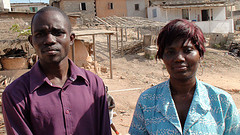
In this week's episode, Nourishing the Planet research intern, Elena Davert, introduces a counter-intuitive method of cleaning water. In 2004 Peter Njodzeka founded the Life and Water Development Group Cameroon (LWDGC) with a rather simple goal. " I wanted to see the people in my area have clean water," he said. "And we kept expanding. That's how it started." Now, LWDGC, with support from Engineers without Borders (EWB) and Thirst Relief International, is teaching households how to use dirt and bacteria to clean their water, greatly improving the quality of drinking water and all but eliminating diseases caused by contaminated water.
When Ahmed Khalfan Ghailani was first transferred to New York from Guantanamo Bay last year, House Republican leader John Boehner of Ohio called it "the first step in the Democrats' plan to import terrorists into America."
More than a year later, Ghailani remains the only detainee from Guantanamo Bay to be brought to the United States. He's scheduled to go on trial starting this week in lower Manhattan. Jury selection begins Monday.
Ghailani is a Tanzanian accused of helping to bomb two U.S. embassies in East Africa in 1998 that killed 224 people. Like the September 11, 2001 attacks, those bombings have been attributed to Osama bin Laden.
In hundreds of legal charges filed with the federal court in New York, Ghailani is accused of having scouted out the American embassy in Tanzania before it was bombed, assembled bomb materials and escorted the suicide bomber to the site. After the bombings, prosecutors say he fled to Afghanistan and rose up the ranks of al Qaeda, forging documents for the group and working as a cook and a bodyguard for Osama bin Laden.
When he was captured in Pakistan in 2004, U.S. authorities deemed Ghailani a "high-value" detainee and sent him to a secret CIA prison for interrogation, where Ghailani claims he was tortured. Indeed, a variety of so-called "enhanced interrogation techniques," including waterboarding, were authorized for use by CIA interrogators on high-value detainees.
Ghailani was transferred to Guantanamo Bay in 2006. Last year, more than ten years after the embassy bombings, he was transferred to the New York prison. The same prison has safely held such notorious criminals as John Gotti and the blind terror leader Sheik Omar Abdel-Rahman.
Critics of Ghailani's transfer warned that his prosecution could be derailed by his abuse in prison and the long delay in bringing him to trial. But the federal judge hearing the case, Judge Lewis A. Kaplan, has denied the defense lawyers' requests to dismiss the trial on those grounds.
Last week, former New York mayor Rudy Giuliani insisted that it would be safer to try Ghailani in a military commission in Guantanamo Bay than in New York City.
Ghailani has already appeared in court for pretrial hearings, however, without incident. New York City police have said that while they will provide some extra security for the trial, the proceedings will not require any of the elaborate and costly measures that New York City officials had warned would be necessary for a trial of the 9/11 plotters. After receiving complaints from local business groups about the potential disruption that trial might cause, Police Commissioner Ray Kelly announced that he would take a range of extraordinary security measures, including a flood of uniformed police officers, checkpoints and thousands of interlocking metal barriers. Mayor Bloomberg estimated the cost at $200 million a year, and the Obama administration soon backed away from the plan.
Despite the huge costs and inconvenience predicted for the 9-11 plotters' trial, no such estimates have been made for the trials of any of those accused of carrying out al Qaeda's U.S. embassy bombing attacks.
Four other men have already been tried and convicted in the same New York courthouse for their roles in the U.S. embassy attacks. All were sentenced to life in prison without parole.
In this regular video series, we bring you images, interviews and more in-depth information about different agricultural innovations. Get to know the NtP team and the innovations we are highlighting regularly, and stay tuned for more NtP TV in the coming weeks!
In this week's episode, Nourishing the Planet (www.NourishingthePlanet.com) research intern, Abby Massey, discusses some of the projects throughout sub-Saharan Africa that are working to give farmers access to clean water for irrigation, washing and drinking. Access to even a little bit of clean water can greatly reduce illness and improve crop yields. With the right resources these projects could bring clean water to even more farmers. Much like water itself-a little of the right kind of funding could go a long way.
Cross posted from Worldwatch Institute's Nourishing the Planet.
Check out the op-ed on preventing food waste that Nourishing the Planet has in this mornings USA Today. We describe how both the United States and sub-Saharan Africa waste enormous amounts of food. In the U.S. we waste food often by simply buying too much and then throwing it away, while in many parts of Africa food rots in fields or in storage before it ever reaches consumers. But there are ways to prevent food waste and the impact it has on the environment-including buying less food, composting food scraps, and developing better storage systems, such as the PICS bag that protects cowpeas from pests in Niger.
We'll also be highlighting more innovative ways to prevent food waste in the upcoming State of the World 2011: Innovations that Nourish the Planet. Tristram Stuart, author of Waste: Uncovering the Global Food Scandal, will author a chapter addressing innovations that can help prevent waste in the food system from farm to fork.
Thank you for reading! If you enjoy our diary every day we invite you to get involved: 1. Comment on our daily posts-we check comments everyday and look forward to a regular ongoing discussion with you. 2. Receive weekly updates-Sign up for our "Nourishing the Planet" weekly newsletter at the blog by clicking here and receive regular blog and travel updates.
Check out this video of Nancy Ayesua Outu, ECASARD financial director, explaining why her work to promote agricultural innovations that are affordable, environmentally sustainable, socially just, and culturally acceptable in Ghana is so valuable. "When have built capacity for farmers and you see their lives improving, it's something that you can't quantify or measure," she says.
Part II: With ECASARD You Can See A Real Impact
Check out this video of Stephen Amoah, ECASARD programs officer explaining why he enjoys working with ECASARD. Amoah started out as a volunteer but is now a full time employee. He says, "it's a joy to hear someone say that because of our training they've increased their yield." Amoah knows that by helping farmers form cooperatives and access agriculture training, he is "really helping the family and community to reduce hunger and poverty" for themselves.
This is the first in a five-part series of my visit with the Ecumenical Association for Sustainable Agriculture and Rural Development and the projects they support in southern Ghana. Cross posted from Worldwatch Institute's Nourishing the Planet blog.
The Ecumenical Association for Sustainable Agriculture and Rural Development (ECASARD), based in Accra, Ghana, is a unique organization. Not only has it brought together members of the Christian and Muslim faith-based communities to help improve the lives of farmers, it also collaborates with farmers groups, NGOs, policy-makers, and research institutions. "We can't do it on our own," says King David Amoah, which is why ECASARD works with these different stakeholders.
Established in 1991, ECASARD works with some 32,000 farmers in 7 regions of southern and central Ghana.
Their goal, says King David, is to both increase food production and reduce rural poverty. They do this by promoting innovations that are affordable, environmentally sustainable, socially just and culturally acceptable.
One of the most important things they do, according to King David, is the promotion of pilot projects. "Farmers can't afford to experiment {with different technologies}," he says, "but ECASARD can fund pilot projects," allowing farmers the freedom to try new things without taking on all the risk.
Their greatest success, says King David, has been "bringing farmers together to organize themselves" into associations and cooperatives, particularly for women. ECASARD "works with the root. We don't go to big-time farmers," according to King David, "we go to the villages."
In addition, ECASARD helps farmers understand the business of farming by helping them connect to markets. Having a market, says King David, gives farmers the incentive to produce more. ECASARD is also making farming a more attractive option, particularly for youth. "If you take farming seriously," according to King David, "it can be your livelihood and make you a rich man {or woman}.
Stay tuned for more about our visits with the farmers groups ECASARD works with on the ground, including palm oil processors, an association of rabbit and grasscutter farmers, a women's dairy cooperative, and a women fishmongers association.
Thank you for reading! If you enjoy our diary every day we invite you to get involved: 1. Comment on our daily posts-we check comments everyday and look forward to a regular ongoing discussion with you. 2. Receive weekly updates-Sign up for our "Nourishing the Planet" weekly newsletter at the blog by clicking here and receive regular blog and travel updates.
Cross posted from Worldwatch Institute's Nourishing the Planet blog.
For pastoralist communities like the well-known Maasai in Kenya, livestock keeping is more than just an important source of food and income; it's a way of life that has been a part of their culture and traditions for hundreds of years.
But, in the face of drought, loss of traditional grazing grounds, and pressure from governments and agribusiness to cross-breed native cattle breeds with exotic breeds, pastoralists are struggling to feed their families and hold on to their culture.
The key, however, to maintaining the pastoralist way of life, at least in Kenya, may also be the key to preserving the country's livestock genetic biodiversity, as well as improving local food security."Governments need to recognize," says Jacob Wanyama, coordinator with the African LIFE Network in Kenya- an organization that works to improve the rights of pastoralist communities in Eastern Africa, "that pastoralists are the best keepers of genetic diversity." (See also: The Keepers of Genetic Diversity)
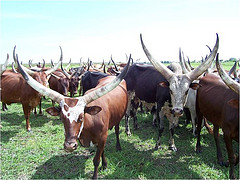
Anikole cattle, for example, a breed indigenous to Eastern Africa, are not only "beautiful to look at," says Wanyama, but they're one of the "highest quality" breeds of cattle because they can survive in extremely harsh, dry conditions-something that's more important than the size and milk production of the cattle, especially as climate change takes a bigger hold on Africa. And indigenous breeds don't require expensive feed and inputs, such as antibiotics to keep them healthy.
More than just a consistent and reliable source of food, Anikole cattle also help preserve the pastoralist culture and way of life. Though most pastoralists recognize that many of their children might choose to go into the cities instead of continuing the nomadic herding lifestyle of pastoralists, the preservation of Anikole cattle and other indigenous breeds will allow those that choose to stay to feed and support their families and community for years to come. (See also: Maintaining Links to Tradition in a Changing World)
And, similarly, in Mozambique, the International Rural Poultry Center of the Kyeema Foundation and International Crops Research Institute for the Semi-Arid Tropics are promoting livestock as more than just a means to improve food security.
The two organizations are partnering to work with farmers-most of them women-to raise chickens on their farms. Because women are often the primary caregivers for family members with HIV/AIDS, they need easy, low-cost sources of both food and income. Unlike many crops, raising free-range birds can require few outside inputs and very little maintenance from farmers. Birds can forage for insects and eat kitchen scraps, instead of expensive grains. They provide not only meat and eggs for household use and income, but also pest control and manure for fertilizer. (See also: Prescribing Improved Nutrition to Combat HIV/AIDS in Africa)
In Rwanda, Heifer International is helping farmers use livestock to rebuild their homes and improve their income after the devastating genocide that occurred 15 years ago. Heifer began working in Rwanda in 2000, introducing a South African dairy breed, known for its high milk production, because, according to Dr. Karamuzi, "no stock of good [dairy cow] genes" was left in the country after the genocide.
And he says that these animals help prove "that even poor farmers can take care of high producing cows." Heifer has certain conditions for receiving cows-including that farmers build a pen and dedicate part of their land to growing pasture-which made people skeptical, especially when they were used to letting animals roam freely to graze on grass. But as people began seeing the results of Heifer's training, they become less suspicious and more interested in working with the group.
And these animals don't only provide milk-which can be an important source of protein for the hungry-and income to families. They also provide manure, which provides not only fertilizer for crops, but also is now helping provide biogas for cooking to households raising cows in the country as part of a the National Biogas Program. And they give families a sense of security as they, and the entire country, continue to recover and rebuild. (See also: Healing With Livestock in Rwanda)
To read more about how smallscale livestock can improve food security and preserve and rebuild communities, see: Teacher Turned Farmer. . .Turned Teacher, Got Biogas?, Conserving Endangered Animal Genetic Resources in Kenya.
Thank you for reading! If you enjoy our diary every day we invite you to get involved: 1. Comment on our daily posts-we check comments everyday and look forward to a regular ongoing discussion with you. 2. Receive weekly updates-Sign up for our "Nourishing the Planet" weekly newsletter at the blog by clicking here and receive regular blog and travel updates.
This is the final blog in a three-part series about FANRPAN's work. It was co-written by Sithembile Ndema, FANRPAN's Natural Resources and Environment Programme Manager and Danielle Nierenberg. Crossposted from Nourishing the Planet.
The Food and Natural Resource Policy Analysis Network's (FANRPAN) Women Accessing Realigned Markets (WARM) project aims at strengthening the capacity of women farmers influence in agriculture policy development and programmes in Southern Africa. It doesn't sound especially entertaining-but it has some innovative strategies for bridging the divide between women farmers, researchers, and policy makers.
FANRPAN is using Theatre for Policy Advocacy to engage leaders, service providers, and policymakers; encourage community participation; and research the needs of women farmers. Essentially, theatre is being used to explain agricultural policy to people in rural areas, and to carry voices from the countryside back to government. Popular theatre personalities travel to communities in Mozambique and Malawi and stage performances using scripts based on FANRPAN's research, to engage members of the community. After each performance, community members, women, men, youth, local leaders are engaged in facilitated dialogues. The dialogues give all community member-especially women-a chance to openly talk about the challenges they are facing without upsetting the status quo. More importantly, it allows women to tell development organizations what they really need, not the other way around.
Ultimately, FANRPAN hopes to train women community leaders to use the theatre advocacy platform to discuss other issues and problems in their villages, including HIV/AIDS. And because this project involves all members of the community, it doesn't alienate men, but includes them in developing solutions.
For more information on FANRPAN and its work in Africa see the following www.fanrpan.org
Thank you for reading! If you enjoy our diary every day we invite you to get involved: 1. Comment on our daily posts-we check comments everyday and look forward to a regular ongoing discussion with you. 2. Receive weekly updates-Sign up for our "Nourishing the Planet" weekly newsletter at the blog by clicking here and receive regular blog and travel updates.
Cross posted from Worldwatch Institute's Nourishing the Planet.
Earlier this week, we highlighted Nicholas Kristof's OP-ED in the New York Times about Gabon, a country in West-Central Africa where the rights of farmers are frequently in conflict with wildlife conservation efforts. One young village chief and farmer, Evelyn Kinga explained that she doesn't like elephants because they eat her cassava plants-a crop her livelihood depends on-because she doesn't benefit from rich foreigners who come to Gabon for eco-tourism.
But it doesn't have to be this way, says Raol du Toit, Director of the Rhino Conservation Trust in Zimbabwe. His organization works closely with farmers on the ground to help communities realize that protecting wildlife can be in their own best interest.
du Toit promotes "landscape-level planning" that takes into account the needs of wildlife, the environment, and farming communities. Rather than relying on development agencies and governments to decide where cattle fences should go or where farmers should plant their crops, local communities and stakeholders need to be part of the process. Development aid, says du Toit, should follow what local stakeholders need and perceive, not the other way around. Additionally, the Rhino Conservation Trust provides classroom materials for schools so that students may learn the connections between sustainable agriculture and wildlife conservation at an early age. (See also Helping Farmers Benefit Economically from Wildlife Conservation)
And du Toit is not alone in his effort to improve the lives of farmers, as well as protect wildlife.
In Tanzania, the Jane Goodall Instutite (JGI) started as a center to research and protect wild chimpanzee populations in what is now, thanks to their efforts, Gombe National Park. But by the early 1990's the organization realized that in order to be successful it would have to start addressing the needs of the communities surrounding the park. JGI was planting trees to rebuild the forest but members of the community were chopping them down-not because they wanted to damage the work but because they needed them for fuel and to make charcoal.
In response, JGI started working with communities to develop government- mandated land use plans, helping them develop soil erosion prevention practices, agroforestry, and production of value-added products, such as coffee and palm oil. "These are services," says Pancras Ngalason Executive Director of JGI Tanzania, "people require in order to appreciate the environment" and that will ultimately help not only protect the chimps and other wildlife, but also to build healthy and economically viable communities. (See also: Rebuilding Roots in Environmental Education)
In Botswana, the Mokolodi Wildlife Reserve is doing more than just teaching students and the community about conserving and protecting wildlife and the environment, they're also educating students about permaculture. By growing indigenous vegetables, recycling water for irrigation, and using organic fertilizers-including elephant dung-the Reserve's Education Center is demonstrating how to grow nutritious food with very little water or chemical inputs.
When school groups come to learn about the animals, the reserve also teaches them about sustainable agriculture. Using the garden as a classroom in which to teach students about composting, intercropping, water harvesting, and organic agriculture practices, the Wildlife Reserve helps draw the connection between the importance of environmentally sustainable agriculture practices and the conservation of elephants, giraffes, impala, and various other animals and birds living in the area.(See also: Cultivating an Interest in Agriculture Conservation)
To read more about innovative ways to protect agriculture and the surrounding wildlife, read: From Alligator to Zebra: Wild Animals Find Sanctuary in the Lilongwe Wildlife Centre, A Funny Thing Happened on the Way to Kigoma, Tanzania, Protecting Wildlife While Improving Food Security, Health, and Livelihoods, Helping Conserve Wildlife-and Agriculture-in Mozambique, Honoring the Farmers that Nourish their Communities and the Planet, and Investing in Projects that Protect Both Agriculture and Wildlife
Thank you for reading! If you enjoy our diary every day we invite you to get involved: 1. Comment on our daily posts-we check comments everyday and look forward to a regular ongoing discussion with you. 2. Receive weekly updates-Sign up for our "Nourishing the Planet" weekly newsletter at the blog by clicking here and receive regular blog and travel updates.
Cross posted from Border Jumpers, Danielle Nierenberg and Bernard Pollack.
In the fight against the spread of HIV/AIDS, there is no silver bullet.
And as we travel throughout sub-Saharan Africa we are seeing dozens of innovative ways that organizations, governments, and individuals are working to fight the disease.
One of the organizations that stands out, thanks to their variety of innovative strategies and approaches to combating the spread of the disease, is the Solidarity Center , an AFL-CIO affiliated non-profit organization that assists workers around the world who are struggling to build democratic and independent trade unions.
We want to share with you three different ways they are making an impact on the ground as we visit projects across the continent.
1) Changing Behavior with Worksite Education and Testing
Johnson Matthey in Germiston , South Africa , just outside of Johannesburg , sees 600 workers pass through its doors every day, heading to work on an assembly lines to make catalytic converters that are inserted in cars to reduce pollution, complying with South Africa 's auto environmental emissions standards.
As we arrived there last January, Percy Nhlapo, a trainer with the Solidarity Center , was leading a discussion with a group of workers, correcting misconceptions about contracting HIV and urging participants to get tested. The Solidarity Center is working in partnership with the National Union of Metal Workers of South Africa (NUMSA), an industrial affiliate of the country's largest union federation, the Congress of South African Trade Unions (COSATU), to provide free HIV/AIDS education and HIV counseling and testing to several thousand manufacturing workers a year (literally going from plant to plant providing trainings).
Following the HIV/AIDS education session, more than 200 workers voluntarily agreed to be tested. At the testing area, we spoke with registered nurse Dorothy Majola, who said that before workers are tested they are given private counseling, and then she administers two separate tests - both with 99.99 percent accuracy - to ensure correct results.
Within ten minutes of being tested, workers receive their results. The companies work in coordination with NUMSA and the Solidarity Center , agreeing to host the HIV/AIDS outreach, allowing workers to attend and get tested at the beginning and end of their work shifts. Before each outreach, shop stewards mobilize their co-workers to participate in the HIV/AIDS activities at their workplace.
Crossposted from BorderJumpers, Danielle Nierenberg and Bernard Pollack.
Originally featured in the North Carolina News Observer.
It's not every day you meet someone from Raleigh while traveling in Lusaka, Zambia. Dale Lewis might not have intended to spend decades in the landlocked African country of 12 million, but his passion for protecting wildlife and for conservation led him there - and his entrepreneurial spirit and desire to lift farmers from poverty while protecting the environment compelled him to stay.
How does Lewis, who attended Broughton High School and whose parents were longtime Raleigh residents, help alleviate hunger and poverty in Zambia's most rural areas?
By making peanut butter, and lots of it!
One of the first things you notice about grocery stores in Zambia is the plethora of processed foods from around the world, from crackers made in Argentina and soy milk from China to popular U.S. breakfast cereals. Complementing these foreign foods, however, are a variety of locally made and processed products, including indigenous varieties of organic rice, all-natural peanut butter and honey from the It's Wild brand.
It's Wild was started by the Community Markets for Conservation (COMACO), which Lewis founded over 30 years ago to conserve and protect local wildlife.
COMACO helps farmers improve their agricultural practices in ways that can protect the environment while also creating a reliable market for farm products. It organizes farmers into producer groups, encouraging them to diversify their skills by raising livestock and bees, growing organic rice, using improved irrigation and fisheries management and other practices so that they don't have to resort to poaching elephants or other wildlife.
By targeting hard-to-reach farmers who live near protected areas, "we're trying to turn things around," Lewis says. For decades, many farmers in eastern Zambia practiced slash-and-burn agriculture and were involved in widespread elephant poaching. It was their only option. Degraded soils and drought left many farmers in the region desperate.
By training more than 650 "lead" farmers to train other farmers, COMACO hopes not only to protect the environment and local wildlife, but also to help farmers increase their incomes by connecting them to the private market. The organization supports creation of regional processing centers and trading depots to make it easier for farmers to process their crops and transport them to market. It also offers a higher price to farmers who grow rice and other products organically and for those who use the conservation farming techniques they've learned from trainers and lead farmers.
Lewis says that when farmers comply with COMACO, they see benefits, including improvements in food security and health.
The resulting products are then sold under the It's Wild brand in major supermarket chains across Zambia, such as ShopRite, Checkers and Spar. Next year, COMACO plans to export its products to Botswana. The organization is trying to do as much of the product distribution as possible so that the money stays with the farmers and not middlemen.
COMACO has also gotten technical support from Minneapolis-based multinational food giant General Mills. The company paid for a COMACO food technician to visit its headquarters in early 2009 to learn how different food processing techniques can increase the nutritional and economic value of the foods the organization is selling. Lewis hopes that eventually COMACO will be self-sufficient, and profitable, without the current dependence on donor funding. But that's not easy for an organization that works with thousands of farmers and has high administrative, transport and salary costs.
He says that he is 70 percent there and is determined to show that his model is not only sustainable, but also profitable.
Danielle Nierenberg is a senior researcher at the Worldwatch Institute and co-project director of "State of World 2011: Nourishing the Planet." Bernard Pollack is a travel writer from the District of Columbia, currently based in Africa.
Thank you for reading! If you enjoy our diary every day we invite you to get involved:
1. Comment on our daily posts -- we check for comments everyday and want to have a regular ongoing discussion with you. 2. Receive regular updates--Join the weekly BorderJumpers newsletter by clicking here. 3.Help keep our research going--If you know of any great projects or contacts in West Africa please connect us connect us by emailing, commenting or sending us a message on facebook.
This is the first in a three-part series about the Food, Agriculture, and Natural Resources Policy Analysis Network. Cross posted from Worldwatch Institute's Nourishing the Planet.
The Food, Agriculture, and Natural Resources Policy Analysis Network (FANRPAN) lives up to its name by linking farmers, businesses, academia, researchers, donors, and national and regional governments. "One thing that we {Africa} fail to do is form coalitions for a common cause," says Dr. Lindiwe Sibanda, the CEO of FANRPAN. But by connecting rural farmers directly to the private sector, to policy-makers, and to the agricultural research community, they're trying to build a food secure Africa.
FANRPAN's has national nodes in thirteen countries that help bring its members together, with a national secretariat hosted by an existing national institution in each country that has a mandate for increasing agricultural research and advocacy.
Another problem that plagues Africa, according to Dr. Sibanda, is that "we don't know how to learn from the local." But she says "farmers know what to do" when it comes to dealing with climate change and other issues that impact agriculture in sub-Saharan Africa. As a result, FANRPAN works to create dialogue and allow exchange of ideas directly between farmers in the field, researchers in laboratories, and policy makers in conference rooms and parliaments throughout Africa.
FANRPAN's projects include everything from helping improve access to markets for women farmers through its Women Accessing Realigned Markets (WARM) project to helping develop and strengthen the Common Market for Eastern and Southern Africa (COMESA) Regional Comprehensive Africa Agriculture Development Programme (CAADP) Compact (See In Eastern and Southern Africa, Improving Trade and Identifying Investment Opportunities and Creating Game Plans for Investment and Policy to Improve Food Security.) They also recently completed the Africa-Wide Civil Society Climate Change Initiative for Policy Dialogues that brought together African NGOs and farmers groups at the United Nations Conference on Climate Change last December. And the Strategies for Adapting to Climate Change in Rural sub-Saharan Africa, to help the most vulnerable populations deal with climate change.
And while Dr. Sibanda says investment in research is important, "it's not the panacea. For me, it's about people driving investments."
Stay tuned for more about FANRPAN's projects later this week.
Thank you for reading! If you enjoy our diary every day we invite you to get involved: 1. Comment on our daily posts-we check comments everyday and look forward to a regular ongoing discussion with you. 2. Receive weekly updates-Sign up for our "Nourishing the Planet" weekly newsletter at the blog by clicking here and receive regular blog and travel updates.
Cross posted form Border Jumpers, Danielle Nierenberg and Bernard Pollack.
In Accra, Ghana, most homes do not have indoor plumbing or sewage systems. Instead, households dispose of waste into the same ditches and streams that urban farmers use to irrigate the crops they sell at local markets. The use of wastewater on farms presents a significant health risk and has been banned by the government. But because many farmers don't have access to clean sources of water, they lack other options for irrigating their crops.
"Ideally we would start at the city level to address wastewater treatment through infrastructure," says Ben Keraita, an irrigation and water engineer and researcher with IWMI. "But there is no money or support for a big project like that, so we start with the farmers to find affordable, small, and simple ways to reduce the risk of contamination."
Starting with the farmers is critical for another reason, Keraita explains. "There are too many different kinds of interventions when it comes to reducing the risk of contamination from waste water, and farmers do not react well to having new techniques pushed upon them." Instead, Keraita and other project coordinators used their existing relationships with local farmers to call a meeting to discuss the problem and hear potential solutions from the farmers themselves. "Farmers know that the waste water is a problem and have lots of their own ideas about how to address it."
Keraita and his colleagues created a list of innovations suggested by farmers and then introduced a few of their own, exposing the farmers to best practices from around the world. "Nothing we introduced was invented on the spot, and many are simple enough to be adopted immediately, like avoiding stepping into irrigation water and stirring up sediment that might contain contaminants by putting down a plank to walk on instead," Keraita explains. Farmers are then asked to volunteer to adopt the practices that they think will be most effective, keeping track of their work daily so that an assessment can be made of the innovation at harvest time.
"If farmers don't like a technique then we suggest doing another trial with a new technique," Keraita says. "And we invite other farmers to view the harvest and the weighing of the crops so that they can give each other feedback and learn from the experiments of others."
Based on these group discussions and trials, urban farmers in Accra are now irrigating with water collected in "waste sedimentation ponds"-ponds built specifically to allow sediment to sink to the bottom so farmers can irrigate with the cleaner surface water-and with simple containers of filtered water. Some are now also using drip irrigation from kits produced by International Development Enterprises (IDE), allowing them to use water more precisely and to conserve clean water (see also Slow and Steady Irrigation Wins the Race).
To read about more innovations in irrigation and reducing the risk of contamination from waste water, see: Getting Water to Crops, Access to Water Improves Life for Women and Children, and ECHOing a Need for Innovations.
Thank you for reading! If you enjoy our diary every day we invite you to get involved: 1. Comment on our daily posts -- we check for comments everyday and want to have a regular ongoing discussion with you. 2. Receive regular updates--Join the weekly BorderJumpers newsletter by clicking here. 3. Help keep our research going--If you know of any great projects or contacts in West Africa please connect us connect us by emailing, commenting or sending us a message on facebook.
We are going to try to write the article we wish we had been able to read before attempting to bus our way across Kenya, Tanzania, Rwanda, and Uganda (December 2009). Cross posted from Border Jumpers, Danielle Nierenberg and Bernard Pollack.
First things first: this will be one of the most worthwhile experiences of your life. Start by flying into Nairobi, Kenya (huge and somewhat affordable airport hub for international flights). More than 30 airlines service flights into Nairobi Embakasi Airport including British Airways, EgyptAir, Emirates, KLM, Virgin Atlantic, and tons of others.
Take your time to enjoy Kenya. People will put the fear of god into you that you are unsafe in Nairobi (they call it "Nairobbery")-but just ignore the hype and check out this amazing city full of incredible food, nightlife, and energy. We traveled all over the country but an especially worthy stop is El Doret (it is on route to Kampala, Uganda) where tea is produced in fields that stretch as far as they eye can see.
We took Kampala Coaches from Nairobi to Arusha, Tanzania. We hated the bus company so much that we wrote a blog about them. Not much competition, even Scandinavia Express discontinued this international route. A spin-off from Kamapala Coaches was in the works and might be a good option, but if Kampala Coaches is your only choice, don't take it all the way to Dar es Salaam. We suggest you go halfway to Arusha and switch companies.
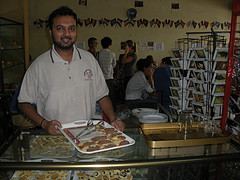
Arusha is a tourist trap. You will be harassed from the moment you arrive to the moment you leave. With that said it is a great place to launch a 4-day trek at Mt. Kilimanjaro with loads of Safari providers. Make sure you stop by The Patisserie (near the clock tower) for the best chocolate croissants on the continent and hi-speed wi-fi. For budget hotel options we recommend "the Tourist Hotel" (pretty central, $30 USD/night for a double with TV, and a affordable restaurant and bar in the lobby-especially good for vegetarians). Skip the Arusha Naaz hotel, despite what Lonely Planet says.
To get from Arusha to Dar Es Salaam use the bus company "Dar Express" which provides a safe, reliable, air-conditioned bus service. Just a warning: on the buses we took they played Christian videos the entire way, but feeling confident your bags are traveling with you makes up for the attempted "conversion"
When you are in Dar es Salaam, stay at the Jambo Inn Hotel (about 30USD a night for a double with air-con, hot water, and cable TV). The hotel is in a safe, functional area with lots of restaurants, internet cafes, and local shopping.
From Dar Es Salaam you can head to Zanzibar. It is a truly magical place . Stay in Stone Town and pay 12pp for the terrific value "spice tour". Just ask a taxi to take you to the public beaches, no need to shell out for a tour. We spent 20USD night and stayed at the Jambo Guest House, a very basic but clean hotel in walking distances to everything. Tip on the ferry to Zanzibar- it is worth it to pay a little extra for the VIP tickets-especially for those who might get sea-sick. The ride is only ninety minutes, but felt like a lot more. Don't let this deter you, the ocean and sunsets are well-worth the bumpy boat ride
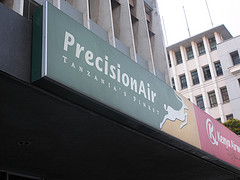
Best way to travel by bus (and the only way) to Kampala, Uganda is via Nairobi. You can take the Dar Express to Arusha and find a bus company that heads to Kampala via Nairobi. Try to arrive in Nairobi during daylight hours. Alternatively, Precision Air flies cheap from Kilamanjaro (an hour bus from Arusha) to Kampala and might be worth the splurge. Precision Air has an office by the clock tower in Arusha.
Kampala is a terrific place. We recommend staying at the Aponye Hotel at approx 30 USD per night with great showers, air-conditioning, and a great central location (you can walk to restaurants, markets, etc). Ironically some of the best Indian food we've ever had was at a restaurant in the Kampala mall. If you go white-water rafting at the source of the Nile, Adrift is a reliable, safe company. While expensive (we had to give it a pass), everyone we met that went Gorilla trekking and said that it was worth every penny.
In terms of busing from Kampala to Kigali, Rwanda, it is extremely safe. The best company we found was Starways and the service is reliable, reasonably clean, safe, and air-conditioned. Many other companies use this route, again, try to avoid Kampala Coaches.
When you get to Kigali, spend a day at the Genocide Museum. It will be an unforgettable experience. You can sometimes catch an affordable flight from there to Nairobi. Keep in mind that Rwanda and Kenya are more expensive than Tanzania and Uganda. Kigali has few solid budget hotel accommodations (and none that we can personally recommend). If using Lonely Planet's Africa book, add approx 50 percent to all listed prices for Kigali.
So, are you ready to rock Eastern Africa by land, air, and sea?! People will think you are crazy but the experience is fun, rugged, and totally unforgettable!
Thank you for reading! If you enjoy our diary every day we invite you to get involved: 1. Comment on our daily posts -- we check for comments everyday and want to have a regular ongoing discussion with you. 2. Receive regular updates--Join the weekly BorderJumpers newsletter by clicking here. 3. Help keep our research going--If you know of any great projects or contacts in West Africa please connect us connect us by emailing, commenting or sending us a message on facebook.


 The
 For pastoralist communities like the well-known Maasai in Kenya, livestock keeping is more than just an important source of food and income; it's a way of life that has been a part of their culture and traditions for hundreds of years.
 The
 Earlier this week, we highlighted Nicholas Kristof's OP-ED in the New York Times about Gabon, a country in West-Central Africa where the rights of farmers are frequently in conflict with wildlife conservation efforts. One young village chief and farmer, Evelyn Kinga explained that she doesn't like elephants because they eat her cassava plants-a crop her livelihood depends on-because she doesn't benefit from rich foreigners who come to Gabon for eco-tourism.
 In the fight against the spread of HIV/AIDS, there is no silver bullet.
 Johnson Matthey in Germiston , South Africa , just outside of Johannesburg , sees 600 workers pass through its doors every day, heading to work on an assembly lines to make catalytic converters that are inserted in cars to reduce pollution, complying with South Africa 's auto environmental emissions standards.
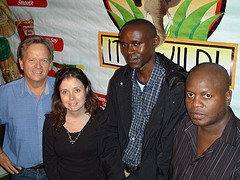 It's not every day you meet someone from Raleigh while traveling in Lusaka, Zambia. Dale Lewis might not have intended to spend decades in the landlocked African country of 12 million, but his passion for protecting wildlife and for conservation led him there - and his entrepreneurial spirit and desire to lift farmers from poverty while protecting the environment compelled him to stay.
 First things first: this will be one of the most worthwhile experiences of your life. Start by flying into Nairobi, Kenya (huge and somewhat affordable airport hub for international flights). More than 30 airlines service flights into Nairobi Embakasi Airport including British Airways, EgyptAir, Emirates, KLM, Virgin Atlantic, and tons of others.
 Arusha is a tourist trap. You will be harassed from the moment you arrive to the moment you leave. With that said it is a great place to launch a 4-day trek at Mt. Kilimanjaro with loads of Safari providers. Make sure you stop by The Patisserie (near the clock tower) for the best chocolate croissants on the continent and hi-speed wi-fi. For budget hotel options we recommend "the Tourist Hotel" (pretty central, $30 USD/night for a double with TV, and a affordable restaurant and bar in the lobby-especially good for vegetarians). Skip the Arusha Naaz hotel, despite what Lonely Planet says.
 Kampala is a terrific place. We recommend staying at the


