Bio: Raj Patel has degrees from the University of Oxford, the London School of Economics and Cornell University, has worked for the World Bank and WTO, and protested against them around the world. He has testified about the causes of the global food crisis to the US House Financial Services Committee and is an Advisor to the United Nations Special Rapporteur on the Right to Food. In addition to numerous scholarly publications, he regularly writes for The Guardian, and has contributed to the LA Times, NYTimes.com, The San Francisco Chronicle, The Mail on Sunday, and The Observer. He is the author of Stuffed and Starved: The Hidden Battle for the World Food System and most recently, The Value of Nothing.
Can you please explain the concept of food sovereignty, and what policies and programs will help encourage it?
Food sovereignty is about communities', states' and unions' rights to shape their own food and agricultural policy. Now that may sound like a whole lot of nothing, because you're actually not making a policy demand, you're just saying that people need to be able to make their own decisions. But, actually, that's a huge thing. Because in general, particularly for smaller farmers in developing countries, and particularly for women, decisions about food and agricultural policy have never been made by them. They've always been imposed.
That's why La Via Campesina, the organization that really invented the term, says that one of the visions behind food sovereignty is that food sovereignty is about an end to all forms of violence against women. That may sound something not at all to do with food, but of course, if we're serious about people being able to make choices about how their food comes to them and what the food system looks like, then the physical and the structural violence to which women are exposed in the home, in the economy and in society, all need to be tackled. Otherwise we will continue with a situation in which 60 percent of the people going hungry today are women or girls. So food sovereignty, to boil it down, is really about power - who has it in the food system, and how to redistribute it so that those who have concentrated it, have it taken away from them.
In terms of specific policies, what Via Campesina are calling for is for agriculture to be removed from the World Trade Organization, which is a way again in which local countries' sovereignty is already been given away. They also call for large corporations to be booted out of agriculture. There's strong opposition to Monsanto for example, and the way that they've been behaving in many developing countries, and many Via Campesina members are campaigning against Monsanto in their home countries.
Will another Green Revolution or more food subsidies help reduce hunger?
To answer the question, let's look at Malawi. It's the poster child for what a new green revolution in Africa might look like, with widespread subsidies of inorganic fertilizer for farmers. When I went there, late last year, what you found was long lines at the gasoline pump, because all Malawi's foreign exchange had been spent on importing this fossil fuel-based fertilizer. The country had bankrupted itself in order that it might be a showcase for the new green revolution in Africa. And of course, there are alternatives right there in Malawi, driven by farmers - invariably by women who are innovating around sustainable systems like poly-culture - growing lots of crops simultaneously together, building soil fertility for the long run.
What this shows is that there are some basic incompatibilities between varieties of ways of addressing agrarian problems in Africa. Some organizations, Worldwatch included, adopt a 'big tent' approach, in which solutions that keep the status quo but improve it marginally sit alongside far more radical approaches. Ultimately, you can't promote genetically modified monoculture or techniques that make large-scale commercial farming less destructive at the same time as wanting something like food sovereignty, which calls for much more of a deeper structural rethink of the way the food system operates. Food sovereignty is about democracy in our food system so that everyone gets to eat - industrial agriculture involves a food system run by technocrats for profit. At the end of the day, you can have one or the other -not both.
How does global agricultural policy affect small-scale farmers across the world?
In general the policies foisted on developing countries through organizations like the World Bank is that large scale agriculture is the way to go: that small farmers are a relic of the past. They are of purely cultural significance but economically, socially, and agriculturally, they stand in the way of development. So the policies that are essentially designed to increase farm size and kick off rural populations to the cities are ones that you see in pretty much every country around the world. And yet of course, it is the poor in rural communities that are being forced to bear the brunt of these policies and these are the communities that are least able to afford it. And again - you can never say it too often - it is on women's shoulders that the bulk of the pain of moving from agrarian society to a so-called modern industrial society one, falls.
This is the final blog in a three-part series about FANRPAN's work. It was co-written by Sithembile Ndema, FANRPAN's Natural Resources and Environment Programme Manager and Danielle Nierenberg. Crossposted from Nourishing the Planet.
The Food and Natural Resource Policy Analysis Network's (FANRPAN) Women Accessing Realigned Markets (WARM) project aims at strengthening the capacity of women farmers influence in agriculture policy development and programmes in Southern Africa. It doesn't sound especially entertaining-but it has some innovative strategies for bridging the divide between women farmers, researchers, and policy makers.
FANRPAN is using Theatre for Policy Advocacy to engage leaders, service providers, and policymakers; encourage community participation; and research the needs of women farmers. Essentially, theatre is being used to explain agricultural policy to people in rural areas, and to carry voices from the countryside back to government. Popular theatre personalities travel to communities in Mozambique and Malawi and stage performances using scripts based on FANRPAN's research, to engage members of the community. After each performance, community members, women, men, youth, local leaders are engaged in facilitated dialogues. The dialogues give all community member-especially women-a chance to openly talk about the challenges they are facing without upsetting the status quo. More importantly, it allows women to tell development organizations what they really need, not the other way around.
Ultimately, FANRPAN hopes to train women community leaders to use the theatre advocacy platform to discuss other issues and problems in their villages, including HIV/AIDS. And because this project involves all members of the community, it doesn't alienate men, but includes them in developing solutions.
For more information on FANRPAN and its work in Africa see the following www.fanrpan.org
Thank you for reading! If you enjoy our diary every day we invite you to get involved: 1. Comment on our daily posts-we check comments everyday and look forward to a regular ongoing discussion with you. 2. Receive weekly updates-Sign up for our "Nourishing the Planet" weekly newsletter at the blog by clicking here and receive regular blog and travel updates.
Wausau Daily Herald: Husband and his wife are helping an African nation farm its was out of poverty
Husband and his wife are helping an African nation farm its was out of poverty
http://www.wausaudailyherald.c...
By Danielle Nierenberg
For the Wausau Daily Herald
Stacia and Kristof Nordin have an unusual backyard, and it looks a lot different from the Edgar yard in which Kristof grew up.
Rather than the typical bare dirt patch of land that most Malawians sweep "clean" every day, the Nordins have more than 200 varieties of mostly indigenous vegetables growing organically around their house. They came to Malawi in 1997 as Peace Corps volunteers, but now call Malawi home. Stacia is a technical adviser to the Malawi Ministry of Education, working to sensitize both policymakers and citizens about the importance of using indigenous foods and permaculture to improve livelihoods and nutrition. Kristof is a community educator who works to train people at all levels of Malawian society in low-input and sustainable agricultural practices.
The Nordins use their home as a demonstration plot for permaculture methods that incorporate composting, water harvesting, intercropping and other methods that help build organic matter in soils, conserve water, and protect agricultural diversity. Most Malawians think of traditional foods, such as amaranth and African eggplant, as poor-people foods grown by "bad" farmers. But these crops might hold the key for solving hunger, malnutrition and poverty in Malawi -- as well as in other African countries.
Nowhere needs the help more than Malawi, a nation of 14 million in southeast Africa that is among the least developed and most densely populated on Earth.
The country might be best known for the so-called "Malawi Miracle." Five years ago, the government decided to do something controversial and provide fertilizer subsidies to farmers to grow maize. Since then, maize production has tripled and Malawi has been touted as an agricultural success story.
But the way they are refining that corn, says Kristof, makes it "kind of like Wonder Bread," leaving it with just two or three nutrients. Traditional varieties of corn, which aren't usually so highly processed, are more nutritious and don't require as much artificial fertilizer as do hybrid varieties.
"Forty-eight percent of the country's children are still nutritionally stunted, even with the so-called miracle," Kristof says.
Rather than focusing on just planting maize -- a crop that is not native to Africa -- the Nordins advise farmers with whom they work that there is "no miracle plant -- just plant them all." Research has shown that Malawi has more than 600 indigenous and naturalized food plants to choose from. Maize, ironically, is one of the least suited to this region because it's highly susceptible to pests, disease and erratic rainfall patterns.
Unfortunately, the "fixation on just one crop," says Kristof, means that traditional varieties of foods are going extinct -- crops that already are adapted to drought and heat, traits that become especially important as agriculture copes with climate change.
"Design," says Kristof, "is key in permaculture," meaning that everything from garden beds to the edible fish pond to the composting toilet have an important role on their property. And although their neighbors have been skeptical, they're impressed by the quantity -- and diversity -- of food grown by the family. More than 200 indigenous fruits and vegetables are grown on their small plot of land, providing a year-round supply of food to the Nordins and their neighbors.
In addition, they're creating a "model village" by training several families who rent houses on the property,) to practice and teach others about the permaculture techniques that they use around their homes. They also have built an "edible playground," where children can play, eat and learn about various indigenous fruits.
More important, the Nordins are showing that by not sweeping, burning and removing all organic matter, people can get more out of the land than just maize and reduce their dependence on high-cost agricultural inputs in the process.
And indigenous crops can be an important source of income for farmers. Rather than import amaranth, sorghum, spices, tamarinds and other products from India, South Africa and other countries, the Nordins are helping farmers find ways to market seeds, as well as value-added products, from local resources. These efforts not only provide income and nutrition, but fight the "stigma that anything Malawian isn't good enough," says Kristof. "The solutions," he says, "are literally staring us in the face."
And as a visitor walked around seeing and tasting the various crops at the Nordins' home, it became obvious that maize is not Malawi's only miracle.
Danielle Nierenberg is a senior researcher at the Worldwatch Institute, blogging daily from Africa
at: http://blogs.worldwatch.org/no... She can be reached at [email protected].
Kenyan farmers persevere despite cultivation challenges
By Nancy Karanja, Danielle Nierenberg and Mary Njenga
Omaha World-Herald
http://www.omaha.com/article/2...
Karanja is a professor at the University of Nairobi. Nierenberg is a senior researcher with the Worldwatch Insitute in Washington, D.C. Njenga is a Ph.D. student at the University of Nairobi.
Driving through the crowded streets of Kibera slums in Kenya, it's nearly impossible to describe how many people live in this area of about 400 hectares, the equivalent of just over half the size of Central Park in Manhattan.
Everywhere you look, there are people. Anywhere from 700,000 to 1 million people live in what is likely the largest slum in sub-Saharan Africa.
And despite the challenges people here face - lack of water and sanitation services, space and lack of land ownership are the big ones - they are thriving and living.
We met a "self-help" group of female farmers in Kibera who are growing food for their families and selling the surplus to their neighbors.
Such groups are present all over Kenya - giving youth, women and vulnerable people the opportunity to organize, share information and skills and ultimately improve their well-being while giving them a voice that otherwise would not be heard.
The women we met were growing vegetables on what they call "vertical farms/gardens." But instead of skyscrapers, these farms are in tall recycled sacks filled with soil, and the women grow crops in them on different levels by poking holes in the bags and mainly planting seeds/seedlings of spinach, kale, sweet pepper and spring onions.
The women's group received training, seeds and sacks from the French NGO Solidarites to start their sack gardens.
The women told us that more than 1,000 women in their neighborhood are growing food in a similar way - something that the International Red Cross recognized as a solution to food security in urban areas during the 2007 and 2008 political crisis in the slums of Nairobi.
For about a month, no food could come into these areas from rural Kenya, but most residents didn't go without food because so many of them were growing crops - in sacks, vacant public land such as that along rail lines and along river banks.
These small gardens could produce big benefits in terms of nutrition, food security and income. All the women told us that they saved money because they no longer had to buy vegetables from the markets or kiosks, and they claimed that the vegetables were fresh and tasted better because they were organically grown - but that sentiment also might come from the pride of growing something themselves.
Mary Mutola has farmed on this land for over two decades. She and the other farmers - more women than men - don't own the land where they grow spinach, kale, spider plant, squash, amaranth and fodder. Instead, the land is owned by the National Social Security Fund, which has allowed the farmers to use the farm through an informal arrangement.
In other words, the farmers have no legal right to the land. They've been forced to stop farming more than once over the years, and although they're getting harassed less frequently, they still face challenges.
About a year ago, the city forced them to stop using untreated wastewater (sewage from a sewer line which they tapped into) to both irrigate and fertilize their crops. Although wastewater can carry a number of risks, including pathogens and contamination from heavy metals, it also provides a rich - and free - source of fertilizer to farmers who don't have the money to buy expensive fertilizer in stores and other inputs. And because of longer periods of drought (likely a result of climate change) in sub-Saharan Africa, the farmers didn't have to depend on rainfall to water their crops.
But even with the loss of their main water supply and nutrient sources, Ms. Mutola and the other farmers are continuing to come up with innovative ways of growing food crops - and incomes - from this farm.
In partnership with Urban Harvest, the farmers are not only growing food to eat and sell but, perhaps surprisingly, also becoming suppliers of seed of traditional leafy African vegetables such as amaranth, spider plant and African nightshade for the commercial vegetable rural farmers who supply the Nairobi city with these high-demand commodities.
Kibera farmers have always grown fodder for livestock feed for both urban and rural farmers. But by establishing a continual source of seed for traditional African vegetables, they're helping dispel the myth that urban agriculture benefits only poor people living in cities.
Using very small plots of land, about 50 square meters, and double dug beds, the farmers can raise seeds very quickly. Fast-growing varieties like amaranth and spider plant take only about three months to produce seeds, worth about 3,000 Kenyan shillings (about $40) in profit. And these seed plots - because they are small - take very little additional time to weed and manage.
The future for these farmers continues to be uncertain. Their land could be taken away, the drought could further jeopardize their crops, and the loss of wastewater for fertilizer could reduce production. But they continue to persevere despite these challenges.
For the past few months, we've been collecting information about agricultural innovations from all over the world (survey in English and French). We shared the initial responses in September and even more responses in November, but continue to receive interesting information and recommendations from farmers, NGOs, research groups, and policymakers in a multitude of countries. Below are a few tidbits we'd like to share.
The following projects, already featured on the Nourishing the Planet blog, have recently provided information for our survey, further describing their agricultural innovations and helping us as we seek to define innovations that best nourish people as well as the world in our upcoming report, State of the World 2011.
From our friends at the Developing Innovations in School Cultivation project in the Mukono District, Uganda: Describing the innovation as spreading a "passion for producing local foods to the next generation," Edward Mukiibi helped flesh out the details of his project by filling out the survey after Danielle's visit. You can read more here: Cultivating a Passion for Agriculture, Conversations with Farmers: Discussing the School Garden with a DISC Project Student, and How to Keep Kids "Down on the Farm."
From Never Ending Food in Lilongwe, Malawi: The Nordins are educating others about permaculture and growing indigenous crops to increase income and improve food security. You can read about Danielle's visit to their home and farm here: Malawi's Real "Miracle" and Sweeping Change.
Please continue to share your agriculture innovations with us. We look forward to featuring your success stories on our blog and in Nourishing the Planet. Stay tuned for more updates from the survey-maybe next time it will be your innovation we highlight!
The story of Kasinthula Cane Growers Limited (KCGL), Malawi’s second biggest sugar farmer cooperative with 282 farmers, is just one of many examples of innovative business models made available to farmers, entrepreneurs, and NGOs by Winrock International. Emphasizing the use of environmentally sustainable production methods, Winrock collects examples of innovative Community Food Enterprises from around the world.
The partnership between KCGL and the Shire Valley Cane Growers Trust is just one example of Winrock’s featured innovations. The two organizations, with support from the government, partnered in 1997 to become a sugarcane farmer cooperative. Despite perpetual drought, and flooding when there is rain, sugar is Malawi’s third largest export. The Trust owns ninety-five percent of the corporation and Illove, one of the largest sugar cane producers in the world, owns the remaining five percent. The Trust leases 755 hectares of sugarcane land that KCGL maintains, guaranteeing farmers—about one-third of whom are women—nearly 3 hectares of land for 25 years. The farmers produce non-organic, fair-trade certified sugar, and the profits are divided equally among the members of the cooperative. All of the sugar produced by the farmers is sold internationally by Illove, connecting the farmers and the cooperative to the global market.
KCGL, in cooperation with Fairtrade Labelling Organizations International, have also developed a plan to direct fair trade premiums towards community investments, company infrastructure and building materials for the farmers. They have built a well for the community, brought electricity to small villages, and are opening their medical clinic to the community for HIV/AIDS education and treatment.
As part of a collective, the farmers are given a voice in an industry where they otherwise might not be competitive. In addition to increased incomes through fair-trade certification and access to the world market, the farmers who are members of KCGL receive the support and stability they need to lift their families out of poverty.


 Bio: Raj Patel has degrees from the University of Oxford, the London School of Economics and Cornell University, has worked for the World Bank and WTO, and protested against them around the world. He has testified about the causes of the global food crisis to the US House Financial Services Committee and is an Advisor to the United Nations Special Rapporteur on the Right to Food. In addition to numerous scholarly publications, he regularly writes for The Guardian, and has contributed to the LA Times, NYTimes.com, The San Francisco Chronicle, The Mail on Sunday, and The Observer. He is the author of Stuffed and Starved:

 The
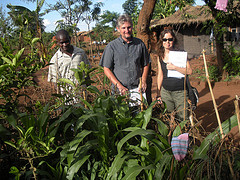 The following projects, already featured on the Nourishing the Planet blog, have recently provided information for our survey, further describing their agricultural innovations and helping us as we seek to define innovations that best nourish people as well as the world in our upcoming report, State of the World 2011.


