The World Cup has ended, and with it South Africa's reputation has soared. The country has enjoyed a boost of free and entirely positive publicity from the event, in contrast to most reports from the Western media - which tend to focus upon the AIDS epidemic and the country's complicated politics.
South Africa today is a product of Nelson Mandela's work. It was Nelson Mandela's continuous (and mostly successful) outreach to South Africa's white minority ensured a degree of racial peace few dared hope would pass during after the days of apartheid.
Indeed, the more one explores the history of countries afflicted with similar problems, the more remarkable the man's achievement seems.
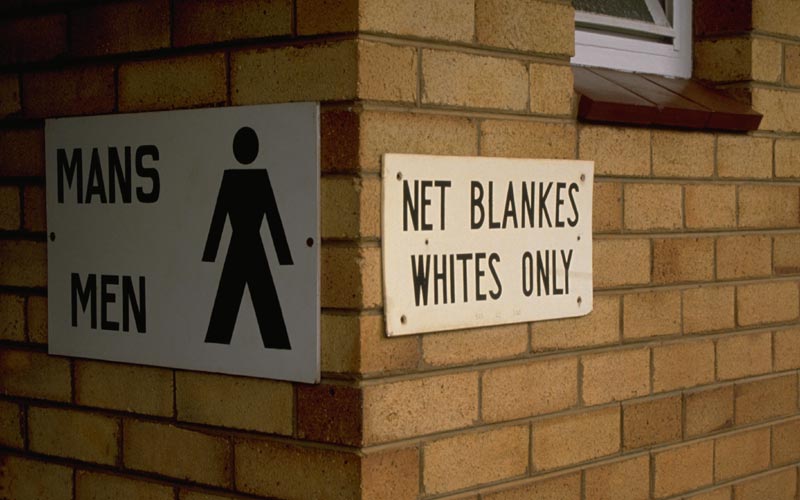
In South Africa, East Asians are both white and black at the same time. Here is how this happened:
For many years South Africa's white minority governed the country through a policy of apartheid - racial segregation and discrimination intended to favor whites and continue white rule. Under the 1950 Population Registration Act, South Africa's government classified individuals into three racial categories. These constituted Blacks, Whites and Coloureds. It was upon the basis of these classifications that apartheid functioned. It was also upon these classifications that parts of apartheid quickly began to approach the ludicrous.
The world, you see, is not just composed of black people and white people. South Africa's apartheid system, however, found it hard to deal with those outside its black-and-white classification scheme.
Cross posted from Border Jumpers, Danielle Nierenberg and Bernard Pollack.
Hundreds of thousands of people from across the world are headed to South Africa to watch the World Cup, descending on Johannesburg, Cape Town, Durban, and six other cities across the country for the biggest sporting event the continent has ever seen. Yet, not everyone headed there is a sports fan. Some are being dragged by spouses, some by friends, some want to be apart of the excitement, but don't want to dish out the dough for tickets, and some are just building in some extra vacation time to see the sights.
My partner Danielle and I recently had the privilege of spending nearly two months traveling across South Africa, meeting with farmers and looking at projects that are working to alleviate hunger and poverty (as part of a 15 month research trip across the continent). Along the way we met with dozens of travelers and packed every weekend with cool excursions. From our travels, here is a guide of 50 non-sport related things to do while in South Africa.
Tons of incredible activities will be missing, so please use the comments section below to create a more comprehensive list.
Johannesburg
What to Do:
1) Spend an entire day at the Apartheid Museum, it's brilliantly laid out using technology and multi-media, and the visit takes you on a journey that will forever change the way you look at race relations and racism. It was a powerful and emotional experience
2) Go on a bike tour of the city
3) Take a private walking tour or 4) group tour of Soweto where you will see Freedom Square, site of the Soweto up-risings, Desmond Tutu's home, the Mandela Museum, and a visit to a local settlement.
5) Reserve a spot on the one and a half hour guided tour organized by SAB brewing (partners with Miller-Coors in the USA) complete with a 3D adventure and an IMAX-style movie, real life machinery depicting the beer making process, and lots more.
6) Aside from the Mall of America in Minnesota, the East Gate Mall is the biggest shopping center I've ever been to. It has two movie theaters and two more huge malls within walking distance. Alternatively, (7) the mall in Rosebank is closer to the city and has everything you might need.
8) If your traveling with kids you might want to take a one hour trip to Maropeng and visit the UNESCO World Heritage Site known as The Cradle of Humankind. The interactive journey offers a underground boat ride, fossils, and learning about how humankind was born.
10) For vegetarians, we loved the Kauai Health Food & Juice Co chain
11) For drinks, sip a martini at Ratz 12) eat sushi at Tokyo Star in Melville, or 13) stop by Sundeck in Norwood. The Rosebank mall also has some lively outdoor options.
14) For live jazz, head to Kippie's and 15) to shake your booty head to Carfax.
Where to stay:
16) For backpackers, consider staying in Soweto at the Diamond Digger's Lodge or 17) Bob's Bunkhouse near the airport.
18) For budget travelers, the Sunbury Bed and Breakfast is a great option or 19) the slightly pricier Turrent Guesthouse, both in the fun and bohemian suburb of Melville in close walking distance to bars, cafes, restaurants, and shops.
How to get to and from:
19) Long-haul bus companies are a good bet, our best experiences and most reliable service was with Intercape bus company.
20) Within South Africa, discount airlines Kulula and 1time are options to consider when South Africa Airways prices are too high.
Pretoria
What to Do:
20) You might consider a tour of the Jacaranda City (named after the tree by the same name), where you can visit historical sites, including the President's Office, Melrose House, the Church Square, Kruger House, and the Voortrekker Monument as well as the Union Buildings.
21) You can escape for the afternoon to the National Zoological Gardens and head up the cable car to see a nice overview of the city.
22) For shopping, Pretoria has a decent-sized mall called Menlyn Park, and a smaller shopping center in Hatfield.
Where to Eat/Drink and enjoy the Nightlife:
23) Head to Hatfield for fun restaurants, bars, and nightlife -- with ten neat places all next to eachother on Burnett street, you don't have to go far.
24) Start your morning with a delicious cup of coffee and free wifi at News Cafe
25) For West and South African food, you can try Kariba restaurant or (26) the African Traditional Pub and Grill
Where to stay:
27) For budget travelers, stay at The Village which is in easy walking distance from all the action in Hatfield, yet clean, friendly, quiet, and includes a delicious breakfast.
Durban:
What to Do:
28) For those looking for a safari, you might head to the Hluhluwe Imfolozi Game Reserve in KwaZulu-Natal. In addition to incredible birds and other species -- you might also spot all the "Big Five" - lions, buffaloes, rhinos, elephant and leopards.
30) Visit a traditional village in Zululand. You can take lessons in traditional dance and music or visit beautiful Phobane Lake
31) For families, you might take the kids to Ushaka Marine World, Africa's largest marine and water park. The place has five "zones" that includes: Sea World (aquarium), a Phantom Ship (restaurant), Wet 'n' Wild (waterpark), and Ushaka Beach.
32) Pay a visit to the Indian Market, where you can grab a bite to eat, buy spices, meet traditional healers, and try on cool fabrics.
33) Durban has a terrific Botanical Gardens, which showcases free live music on Sundays, and allows you to picnic on the property.
Where to Eat/Drink and Enjoy the Nightlife:
34) Vegans and Vegetarians will love EarthMother restaurant which has a terrific menu of locally grown, organic foods. Also, it has the best fresh juice and smoothie bar in all of South Africa
(35) For seafood lovers, you won't go wrong with a trip to New Cafe Fish or (36) Famous Fish Co
Where to Stay:
37) For backpackers avoid the over-priced, poor value, Lonely Planet pick called Gibela Backpackers and instead head down the same street to Tekweni Backpackers Hostel in Morningside.
Cape Town
What to Do:
38) Book ahead for a visit to Robben Island, where Mandela and other prisoners were incarcerated. Afterwards 39) take walking tour to the District Six museum, where you will see the remnants of homes that were destroyed.
40) Check out the Cape of Good Hope Nature Reserve where you can see a breathtaking view at Cape Point, go swimming, and visit a nearby penguin colony
41) You can go scuba diving and snorkel with the Great White Sharks of South Africa. This cave dive is a very popular tourist attraction, where you can literally look the ocean's toughest predator in the eyes.
42) About 90mins by car away is a great spot to head on a safari day trip called Aquila Game Reserve where you will be able to spot giraffes, lions, leopards, and zebras.
43) Tour the Stellenbosch and Paarl Valley wineries. South African wine is famous around the world and you can find several affordable tour companies that will take you between vineyards by bike, 44) bus, or 45) by foot.
46) Hike, 47) mountain bike, or take a cable car to the top of Table Mountain, which offers incredible views of Cape Town City, Table Bay and Robben Island.
48) For shopping you can head to the Victoria and Alfred Waterfront. It's pricey, but there are tons of restaurants, shops, bars, and even a movie theater.
Where to Eat/Drink and Enjoy the Nightlife:
49) One tour company provides the opportunity to "break bread" with two local Cape Town families, including a home-cooked meal and stunning views over Cape Town, and shared conversation. Then you head to a second host family for coffee and more cultural sharing.
50) Start with homemade Italian food at 95 Keerom, then 51) head for a drink at the Nose Wine Bar, 52) before going out dancing at Snap. It's easy to have a great time in Cape Town with incredible, vibrant nightlife.
Where to Stay:
53) For backpackers you might try the fun (but very noisy) Long Street backpackers in the heart of restaurant and bar nightlife.
54) For budget travelers you will enjoy St John's Waterfront Lodge, located right in the heart of the city, it's quit, clean, well-managed, and very friendly.
Thank you for reading! If you enjoy our diary every day we invite you to get involved: 1. Comment on our daily posts -- we check for comments everyday and want to have a regular ongoing discussion with you. 2. Receive regular updates--Join the weekly BorderJumpers newsletter by clicking here. 3. Help keep our research going--If you know of any great projects or contacts in West Africa please connect us connect us by emailing, commenting or sending us a message on facebook.
This is the final blog in a three-part series about FANRPAN's work. It was co-written by Sithembile Ndema, FANRPAN's Natural Resources and Environment Programme Manager and Danielle Nierenberg. Crossposted from Nourishing the Planet.
The Food and Natural Resource Policy Analysis Network's (FANRPAN) Women Accessing Realigned Markets (WARM) project aims at strengthening the capacity of women farmers influence in agriculture policy development and programmes in Southern Africa. It doesn't sound especially entertaining-but it has some innovative strategies for bridging the divide between women farmers, researchers, and policy makers.
FANRPAN is using Theatre for Policy Advocacy to engage leaders, service providers, and policymakers; encourage community participation; and research the needs of women farmers. Essentially, theatre is being used to explain agricultural policy to people in rural areas, and to carry voices from the countryside back to government. Popular theatre personalities travel to communities in Mozambique and Malawi and stage performances using scripts based on FANRPAN's research, to engage members of the community. After each performance, community members, women, men, youth, local leaders are engaged in facilitated dialogues. The dialogues give all community member-especially women-a chance to openly talk about the challenges they are facing without upsetting the status quo. More importantly, it allows women to tell development organizations what they really need, not the other way around.
Ultimately, FANRPAN hopes to train women community leaders to use the theatre advocacy platform to discuss other issues and problems in their villages, including HIV/AIDS. And because this project involves all members of the community, it doesn't alienate men, but includes them in developing solutions.
For more information on FANRPAN and its work in Africa see the following www.fanrpan.org
Thank you for reading! If you enjoy our diary every day we invite you to get involved: 1. Comment on our daily posts-we check comments everyday and look forward to a regular ongoing discussion with you. 2. Receive weekly updates-Sign up for our "Nourishing the Planet" weekly newsletter at the blog by clicking here and receive regular blog and travel updates.
Cross posted from Border Jumpers, Danielle Nierenberg and Bernard Pollack.
In the fight against the spread of HIV/AIDS, there is no silver bullet.
And as we travel throughout sub-Saharan Africa we are seeing dozens of innovative ways that organizations, governments, and individuals are working to fight the disease.
One of the organizations that stands out, thanks to their variety of innovative strategies and approaches to combating the spread of the disease, is the Solidarity Center , an AFL-CIO affiliated non-profit organization that assists workers around the world who are struggling to build democratic and independent trade unions.
We want to share with you three different ways they are making an impact on the ground as we visit projects across the continent.
1) Changing Behavior with Worksite Education and Testing
Johnson Matthey in Germiston , South Africa , just outside of Johannesburg , sees 600 workers pass through its doors every day, heading to work on an assembly lines to make catalytic converters that are inserted in cars to reduce pollution, complying with South Africa 's auto environmental emissions standards.
As we arrived there last January, Percy Nhlapo, a trainer with the Solidarity Center , was leading a discussion with a group of workers, correcting misconceptions about contracting HIV and urging participants to get tested. The Solidarity Center is working in partnership with the National Union of Metal Workers of South Africa (NUMSA), an industrial affiliate of the country's largest union federation, the Congress of South African Trade Unions (COSATU), to provide free HIV/AIDS education and HIV counseling and testing to several thousand manufacturing workers a year (literally going from plant to plant providing trainings).
Following the HIV/AIDS education session, more than 200 workers voluntarily agreed to be tested. At the testing area, we spoke with registered nurse Dorothy Majola, who said that before workers are tested they are given private counseling, and then she administers two separate tests - both with 99.99 percent accuracy - to ensure correct results.
Within ten minutes of being tested, workers receive their results. The companies work in coordination with NUMSA and the Solidarity Center , agreeing to host the HIV/AIDS outreach, allowing workers to attend and get tested at the beginning and end of their work shifts. Before each outreach, shop stewards mobilize their co-workers to participate in the HIV/AIDS activities at their workplace.
We spent a couple of days in Durban which is the third largest city in South Africa. We arrived exhausted from Maputo, Mozambique after a 24-hour bus ride on Intercape (gotta love when they breakdown for hours in the middle of the journey and you have to jump on a replacement bus seven hours later).
Durban has a population of almost 3.5 million, and is a major domestic tourist destination, close to national parks and the historic sites of Zululand and the Drakensberg. Similar to our experience in J'burg, people kept warning us about the crime rate due to the economic crisis that resulted in very high rates of unemployment, reaching over 30% in many parts of the city.
Again we felt pretty safe, never felt threatened in any way or scared, despite staying at a hostel right in the city center, where we took advantage of all the terrific hi-speed wi-fi spots, nightlife, and affordable restuarants in walking distance.
We want to share with you the terrific site visits we had there...
We met with Richard Haigh, who probably doesn't look like your typical African pastoralist. Unlike many Africans who grew up tending cattle, sheep, goats, and other livestock, Richard started his farm at the age of 40 after quiting his 9-5 NGO job and buying 23 acres of land outside Durban, South Africa. Today, he runs Enaleni Farm, raising Zulu sheep, which are considered endangered, and Nguni cattle, a breed indigenous to South Africa, which is very resistant to pests, as well as a variety of fruits and vegetables. Richard is cultivating GMO-free soya, as well as traditional maize varieties-"all the maize," says Richard, "tells a story."
Like the sheep and cattle, many maize varieties are resistant to drought, climate change, and disease making them a smart choice for farmers all over Africa. This sort of mixed-crop livestock system is increasingly becoming rare in South Africa, according to Richard, because of commercial farms that rely on monoculture crops rather than diverse agricultural systems.
But perhaps the most important thing Richard is doing at Enaleni doesn't have to do with the different agricultural methods and practices he is using, but with the "stories" he's telling on the farm. By showing local people the tremendous benefits of indigenous breeds of cattle and sheep and sustainably grown crops can have for the environment and for improving livelihoods, he's putting both an ecological and economic value to something that has been neglected. "Local people don't value what they have," says Richard, because of extension agents who promote exotic breeds of livestock and expensive inputs.
And Richard is also helping document the diversity on his farm. He's been sending blood samples to the South African National Research Foundation in order to help them build a DNA hoofprint of what makes up a Zulu sheep. This sort of research is important for not only conserving the sheep, but also helping local people by increasing their knowledge about the breeds they've been raising for generations.
We also met with Dr. Raymond Auerbach, the founder of Rainman Landcare Foundation, who nearly bursts with enthusiasm when he talks about the growth of organic agriculture practices in South Africa over the years. The Rainman Landcare Foundation (located outside Durban) is training farmers living outside of Durban on how to grow food without the use of artificial pesticides, insecticides, or fertilizers, as well as permaculture methods that efficiently use water and build up soils. The Foundation recently had to discontinue the trainings at its headquarters, which is also the home Raymond shares with his wife, Christina, because of lack of funding. Now, the Foundation works with farmers at their own farms, teaching them how to build swales to prevent erosion and runoff, use mulch to help protect soils, and make and utilize organic compost. "Compost is very much the heart of the farm," says Auerbach, referring to how compost can eliminate the need for many expensive outside inputs, such as inorganic fertilizers.
Organic farmers in South Africa share some of the same problems as their colleagues in the United States, says Raymond. While Raymond and others fought for organic certification standards for farmers in the 1990s, the requirements are usually too expensive and cumbersome for many small, rural farmers. Certification can cost anywhere from 10,000-20,000 Rand (about $1,300- $2,600) and requires complicated paperwork, which can be difficult for semi-literate farmers. But by developing Participatory Guarantee Standards (PGS) for Organic Agriculture, which includes developing local standards and training local inspectors, while eliminating expensive certification fees for small growers, Raymond believes that poor, rural farmers can benefit from the growing demand in South Africa for organic food.
Other things we recommend while visiting Durban:
1. Have breakfast or lunch at Earthmother Organic (134 Davenport Road) where you can choose from delicious salads, sandwiches, and hot meals with very healthy organic ingredients. For vegans this might be your best option in the city, and we highly recommend anything off the menu of freshly squeezed juices. Raymond is a supplier to them as are many of the local farmers outside Durban.
2. Whether you like walking along the beach, surfing, swimming, or all of the above -- Durban's "Golden Mile" boats warm water all year round.
3. Go check out the Durban Botanical Gardens, a beautiful get-away, with free live concerts on Sunday afternoons, and a laid-back atmosphere (they let you bring in groceries to have your own picnic).
Cross posted from Worldwatch Institute's Nourishing the Planet.
Richard Haigh runs Enaleni Farm outside Durban, South Africa, raising endangered Zulu sheep, Nguni cattle (a breed indigenous to South Africa that is very resistant to pests), and a variety of fruits and vegetables. Check out this video from my conversation with Richard about his sheep, his garden, and the meaning behind the name of his farm:
Cross posted from the Worldwatch Institute's Nourishing the Planet.
Richard Haigh doesn't look like your typical African pastoralist. Unlike many Africans who grew up tending cattle, sheep, goats, and other livestock, Richard started his farm in 2007 at the age of 40. He quit his 9-5 job at a nongovernmental organization and bought 23 acres of land outside Durban, South Africa.
He wanted to totally change his life.
Today, he runs Enaleni Farm (enaleni means "abundance" in Zulu), raising endangered Zulu sheep, Nguni cattle (a breed indigenous to South Africa that is very resistant to pests), and a variety of fruits and vegetables.
Richard is cultivating GMO-free soya, as well as traditional maize varieties. "All the maize tells a story," he says. Like the sheep and cattle, many maize varieties are resistant to drought, climate change, and diseases, making them a smart choice for farmers all over Africa.
This sort of mixed-crop livestock system is becoming increasingly rare in South Africa, according to Richard, because of commercial farms that rely on monoculture crops rather than on diverse agricultural systems.
Richard likes to say that his farm isn't organic, but rather an example of how agro-ecological methods can work. He practices push-pull agriculture, which uses alternating intercropping of plants that repel pests (pushing them away from the harvest) and ones that attract pests (pulling them away from the harvest) to increase yields. He also uses animal manure and compost for fertilizer.
But perhaps the most important thing Richard is doing at Enaleni doesn't have to do with the various agricultural methods and practices he's using. It's about the "stories" he's telling on the farm. By showing local people the tremendous benefits that indigenous cattle and sheep breeds, and sustainably grown crops, can have for the environment and livelihoods, he's putting both an ecological and economic value on something that's been neglected. "Local people don't value what they have," says Richard, because extension agents have tended to promote exotic livestock and expensive inputs.
In addition, Richard asks himself "what can we do that is specific to where we live?" In other words, how can we promote local sources of agricultural diversity that are good for the land and for people?
Richard is also helping document the diversity on his farm. He's been sending blood samples to the South African National Research Foundation to help them build a DNA "hoof print" of what makes up a Zulu sheep. This sort of research is important not only for conserving the sheep, but for helping to increase local knowledge about the breeds that people have been raising for generations.
As a result of his conservation work, Richard and Enaleni Farm have been recognized by Slow Food International, which wants to work with the farm and local communities to find ways to ensure that the Zulu sheep don't disappear.
Richard hopes to share his knowledge about agriculture with local farmers, teaching them how to spot and prevent disease in indigenous sheep, as well as explaining agro-ecological methods of raising food.
This is the second in a two-part series about my visit to the Rainman Landcare Foundation in Durban, South Africa. Cross posted from Nourishing the Planet.
The Rainman Landcare Foundation, founded by Raymond Auerbach, is training farmers living outside of Durban on how to grow food without the use of artificial pesticides, insecticides, or fertilizers, as well as permaculture methods that efficiently use water and build up soils. "But it won't be enough to just grow organic food," says Raymond. "You also need to market it." Check out this video where Raymond explains how, in addition to teaching farmers organic agriculture practices, the Rainman Foundation helps them establish links with the private sector:
Earthmother Organic Store and Restaurant is an example of a business that is also providing a link for farmers to the private sector. Check out this video of Danielle explaining how the store and restaurant gives farmers, like those trained by the Rainman Landcare Foundation, a market for their produce.
This is the second in a two-part series of my visit to Africa Harvest in Johannesburg, South Africa.
Daniel Kamanga, the Director of Communications of Africa Harvest, and former journalist, says that journalism in Africa has to overcome many challenges, including a general lack of coverage on agriculture issues-let alone a deeper understanding about who is funding agricultural development in Africa. "No one knows who Bill [Gates] is in Africa," lamented Kamanga. The Bill & Melinda Gates Foundation is one of the biggest and most influential funders of agricultural development in sub-Saharan Africa. (See Filling a Need for African-Based Reporting on Agriculture).
"You can't have a revolution in Africa if people aren't briefed," says Kamanga, referring to the call for a Green Revolution in Africa by the Alliance for a Green Revolution in Africa (AGRA). Although agriculture makes up about 98 percent of the economy in Kenya, it's barely covered in the country's newspapers. And there are not any agricultural editors at any of the newspapers on the entire continent.
But it's not just a question of reporters having more knowledge, according to Kamanga. It's also a matter of compensation. African journalists are typically paid very little compared to journalists in other countries. In Burkina Faso, reporters receive just 160 dollars per month. As a result, many journalists see bribes as a way to supplement their income.
Yet with newspaper and media consolidation, fierce competition for advertisers, and lackluster economic conditions in Africa and all over the world, it's a trend that might only get worse.
This is the first of a two-part series to Africa Harvest, in Johannesburg, South Africa. Cross posted fromNourishing the Planet.
In our Nourishing the Planet project we're looking at how farmers and researchers all over the world are combining high-tech and low-tech agricultural practices to help alleviate hunger and poverty. One place they're trying to do this is at Africa Harvest/Biotech Foundation International. The organization's mission is "to use science and technology, especially biotechnology, to help the poor in Africa achieve food security, economic well-being and sustainable rural development."
And while the biotechnology component of their mission may be controversial to some, Africa Harvest is determined that Africa will not be left behind when it comes to the development-and use- of the technology by African researchers and farmers. As a result, the organization is focusing on breeding African crops for Africans. "If you want to make a difference on this continent," says Daniel Kamanga, communications director for Africa Harvest, "you have to look at African crops." These include staples such as banana, cassava, and sorghum, which are all important sources of nutrients for millions of Africans.
But these are also crops that are heavily impacted by diseases and pests. Bananas, for example, are susceptible to sigatoka virus, fusarium, weevils, nematodes, and others. To combat these problems, Florence Wambugu, the CEO of Africa Harvest and a scientist who formerly worked with Monsanto, helped develop Tissue Culture Banana (TC banana). Banana diseases are often spread through "unclean" planting material. But TC banana technology allows scientists to use biotechnology for the "rapid and large scale multiplication" of disease free bananas-a single shoot can produce 2,000 individual banana plantlets.
Africa Harvest is also working on biofortifying sorghum with Vitamin A, creating "golden sorghum."
"But of course, there remains the thorny issue of control-among the biggest stumbling blocks for sharing any technology across countries and regions. Biotechnology has so far been largely owned by the private sector." So, in addition to researching crop production, Africa Harvest is also working to improve capacity building for scientists all over Africa. "If we're going to have GMOs on the continent," says Kamanga, "we want scientists who know how to do it." Along with that, Africa Harvest is working to strengthen regulatory systems for biotechnology.
And how does Africa Harvest respond to criticism about the development and use of biotechnology in agriculture? According to Kamanga, it's an "old debate" and one that takes place in 5-star hotels, not in farmers' fields. The issue now, he says, is how we make the best use of this technology.
Yesterday, on Democracy Now!, Amy had an hour long interview with Breyten Breytenbach, one of South Africa's best-known public figures, a poet, writer, painter and anti-apartheid activist. This is actually the second hour-long interview Amy has done with Breytenbach in the last month-the first one was exactly one month earlier. She rarely does hour-long interviews. The fact that she's now done two within a month of one another with Breytenbach should tell you this is someone worth listening to.
So, why is that? Well, there's Breytenbach, the man himself, and there's the world situation right now. If we want to have a new relationship with the rest of the world, one that actually increases security and well-being for all, we're going to have to start with being a lot better listeners. And this is a place to start. This is a part of the world in which America could do a great deal of good for a tiny fraction of the money we have been wasting in Iraq, particularly if we listen carefully to their stories, and take guidance from them.
Why listen to Breytenbach in particular? First of all, he comes from as far inside the world of privilege, and has fought as hard against it, risking, and paying as much as anyone else in the anti-apartheid struggle. He was jailed for more than seven years under the apartheid regime, two of them in solitary confinement, the subject of probably his most famous book, the memoir, The True Confessions of an Albino Terrorist. (At the same time, his oldest brother was the head of the special forces in South Africa.) So he speaks with an unusual degree of moral and artistic authority, strongly committed to social justice, with clear-eyed critiques of failed policies and missed opportunities. He remains deeply devoted to the transformation of South Africa, which he sees as a two-stage process, which has yet to seriously address the social and economic inequality underlying the political inequality of the apartheid era. He has a continent-wide perspective, and is quite perceptive in dissecting why the promise of liberation from colonial rule has not been realized, both in terms of continued European and American interference and in terms of internal political failures. He also has important insights into the very different nature of Islam in Africa as opposed to the imagery Americans have from the Middle East.
Breytenbach was described as the only example of a "nice South African" in the song "I've Never Met A Nice South African". The song was written by John Lloyd for the satirical British TV series, Spitting Image.
I've selected a few significant segments below the fold. I hope they'll pique your interest enough to read the whole transcript or listen online.


 Hundreds of thousands of people from across the world are headed to South Africa to watch the World Cup, descending on Johannesburg, Cape Town, Durban, and six other cities across the country for the biggest sporting event the continent has ever seen. Yet, not everyone headed there is a sports fan. Some are being dragged by spouses, some by friends, some want to be apart of the excitement, but don't want to dish out the dough for tickets, and some are just building in some extra vacation time to see the sights.
 1) Spend an entire day at the
 10) For vegetarians, we loved the Kauai Health Food & Juice Co chain
 20) Within South Africa, discount airlines Kulula and
 34) Vegans and Vegetarians will love
 38) Book ahead for a visit to
 The
 In the fight against the spread of HIV/AIDS, there is no silver bullet.
 Johnson Matthey in Germiston , South Africa , just outside of Johannesburg , sees 600 workers pass through its doors every day, heading to work on an assembly lines to make catalytic converters that are inserted in cars to reduce pollution, complying with South Africa 's auto environmental emissions standards.
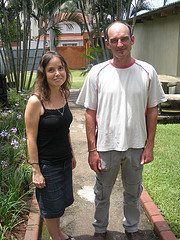 Today, he runs Enaleni Farm (enaleni means "abundance" in Zulu), raising endangered Zulu sheep, Nguni cattle (a breed indigenous to South Africa that is very resistant to pests), and a variety of fruits and vegetables.
 This is the second in a two-part series of my visit to Africa Harvest in Johannesburg, South Africa.


