|
After the health insurance reform bill was singed into law today, Matthew Yglesias optimistically declared that "progressive efforts to expand the size of the welfare state are basically done."
I agree that this bill is a step forward for social safety net. It greatly expanded, and likely solidified, both Medicaid and the Community Health Center system as untouchable parts of the welfare state. It also bolsters the long-term trend of public social investment spending (a broader category than just the welfare state) increasing as a share of GDP:
Social investment spending as a percentage of GDP, by category, 1970-2010
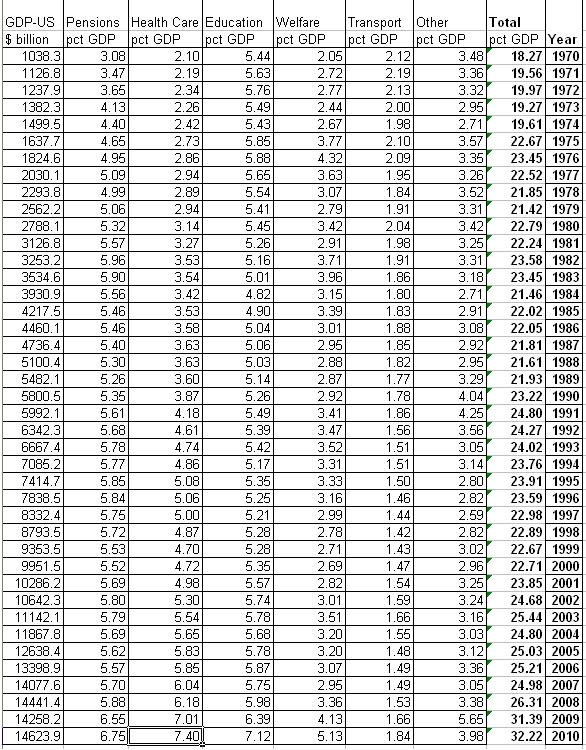
Those numbers do not include public spending on defense, criminal justice, debt payments, or general government administration. Further, the overall numbers will not drop below 30% after the stimulus and TARP programs are over, and as the unemployment rate continues to decline. It is likely that, as a nation, we will never go back to below 30%.
However, despite these gains, it is premature to declare progressive fights to expand the social safety net over. As just one glaring example, in most states, people aged 27-64, and with an income over 133% of the poverty level, are not eligible to for public health insurance. Without even mentioning ongoing disparities in other areas of the social safety net, such as education funding, the lack of access to public health insurance is a pretty big doughnut hole to fill.
Additionally, there will also be an ongoing effort by Republicans, and many Democrats, to shrink the size of the welfare state we already have. The widespread backing for Social Security and Medicare "cat food" commissions within both parties is a strong sign up this.
Taking the long view, the fights against shrinking the social safety net, and the fights to expand it by closing the doughnut holes in those nets, will closely coincide. In particular, allowing everyone to purchase Medicare can become a means of putting the program on solid financial foot over the long-term. As such, expect struggles over whether to expand, or reduce, the size of Medicare to become the main framework for the next decade of debates over the size of the social safety net.
|


