I can still remember starting out in progressive politics. It was back in the early part of the last decade, and there was very little tolerance back then for anything even remotely resembling a progressive counterforce to the corporatist conservatism embedding itself within the Democratic Party. That’s not to say that there wasn’t a counterforce – it is only to say that there wasn’t much tolerance for one, and there wasn’t a lot of public space for any kind of progressive discourse. There wasn’t, in other words, much of a genuinely open left.
This (not surprisingly) deeply troubled me – and my disgust got me into more than a little trouble in career. As just one example, I recall being raked over the coals by some of my co-workers at the Center for American Progress when I simply pointed out how much credit card industry cash the Democrats who voted for the bankruptcy bill had taken.
That was then, though – and this is now. And thanks, in part, to this site, it’s fair to say that there is a much more open left than there even was a few years ago.
So while I am sad to see the end of OpenLeft.com, I also think all of us in the OpenLeft community – from the front-page posters to the diarists to the commenters – can declare Mission Accomplished. No, we haven’t realized the progressive agenda we all continue to fight for and believe in – sadly, not even close. However, I do think that we have played a significant role in opening up the left to the kind of vigorous principled debates that have been lacking for far too long. I don’t think that’s self-aggrandizement – I think that’s just a statement of fact, one that we should all feel proud of. It’s not often that you get to contribute to an endeavor that genuinely changes the scope and parameters of our national political discourse.
On a personal note, I just want to offer a huge thank-you to everyone at OpenLeft. Scratching and clawing together a career in independent media is no easy task – and having a venue to write professionally without fear of editorial backlash is extremely rare. OpenLeft provided that for me, and I couldn’t have survived on this career path without both the creators of this site, and the tremendously constructive community here.
For me, all those projects I am working on – from a radio show with a fast-growing audience, to book writing, to a syndicated column – are a dream come true. Really, I feel so lucky to have cobbled together a career in this line of work – and now, I’ve got almost more work than I can handle (no doubt, a good problem to have in this tough economy). But none of it would have been possible without this community here at OpenLeft. I am eternally grateful for the chance, and in closing will just reiterate what I said to start: As much as I wish that OpenLeft.com could continue, I’m confident that we have helped truly open the left. That, more than anything, is what this project has always been about – and for good reason. Only with an open and vigorous left will we have a chance at achieving the change our country and world so desperately needed.
As the Obama administration continues to treat the U.S.-taxpayer-financed dictator Hosni Mubarak with kid gloves, media outlets like Salon have rightly pointed out that our support of undemocratic tyrants is not limited to Egypt. It has become more the norm than the exception. The question is: why? Why are we, a supposed beacon of democracy, so invested in so many dictatorships?
Obviously, there are many answers to that question. Some of it has to do with imperial aspirations, as taboo as that is to even mention. Some of it has to do with good ol’ fashioned Big Money lobbying, as I showed yesterday. And some of it has to do with what Dr. Martin Luther King identified in his Riverside Church speech: We back dictators over democracy because we “refuse to give up the privileges and the pleasures that come from the immense profits of overseas investments” — profits often guaranteed by dictators where they wouldn’t be so guaranteed by popularly elected governments.
As powerful as these motives are, however, there is still one other factor at play: addiction.
Dictators are, in a way, like a drug. We start out backing them, perhaps thinking it will be a momentary alliance, just like a person might take a single hit from the pipe. But then, the subjugated population begins to revolt, just like the body begins to revolt without the drug. So we start intensifying our support for the dictator to keep the increasingly restive population down, just like the addict starts to consume more drugs to prevent the body from going into a more painful withdrawal.
This cycle of addiction then snowballs (to badly mix metaphors). The more angry the subjugated population becomes at the dictator and us for backing him, the more we feel an urgency to help prop up the dictator for fear of an ever-more powerful backlash against that dictator and, by extension, us. It’s like the addict thinking the only way to survive and mitigate pain is to keep upping the dosage.
Of course, the only way to truly fix the problem is some sort of intervention — to break the cycle on our own terms, rather than effectively overdose. Instead of, say, unendingly backing dictators like the Shah of Iran until the repression creates the condition for a catastrophic fundamentalist revolution (overdose), we should be looking for ways to proactively break this addiction cycle completely as a way to avoid such catastrophe.
That’s what the Egypt protests still (amazingly) provides us right now — a way to break that cycle without helping to further create the conditions for catastrophe. Right now, we have an out — protests in the street still give us a fleeting opportunity to back away from our addiction to dictatorship (in this case, the Mubarak dictatorship). Incredibly (and thankfully), despite our 30 year backing of Mubarak, it doesn’t seem like we are at that overdose point yet — that point of, say, an Iran-style revolution based on raw anti-American anger. And indeed, if we are truly worried about an Iran-style conflagration in Egypt, the best way to try to avoid it isn’t to back the dictator creating such a backlash – it’s to stop backing the dictator.
Certainly, there will be unpleasant moments if we finally decide break our dictator addiction — just like its painful for the junkie to go cold turkey, we may feel uncomfortable with newly democratic governments choosing to do things we don’t like. But if we continue taking more hits of Mubarak’s dictator drug, we will be doing our part to guarantee that much more painful overdose, because we will be further aligning ourselves with the regime the subjugated Egyptian populace so despises. And more generally, if we perpetuate this cycle of dictator addiction by continuing to so forcefully back all those other dictatorships around the globe, we will be helping guarantee other overdoses in the future.
The question of why the American government has been so hesitant to push dictator Hosni Mubarak from power is typically answered in our media through the construct of “pragmatism.” If Mubarak leaves, the talking point goes, there could be a new government in Egypt that could threaten “regional stability” with an Iranian-style revolution. This talking point is both bigoted and imperial: It assumes that all Muslims and revolutions are monolithically the same (despite Egypt being Sunni and Arab and Iran being Shiite and Persian), and it assumes that “regional stability” is automatically threatened if a nation exists in the Mideast that isn’t under our thumb.
Nonetheless, the “pragmatism” talking point persists, and thus our government continues to deal with the dictator with kid gloves. But here’s the thing: We’re playing footsie with Mubarak not just because of the self-serving neoconservative construct of “pragmatism” — but also because of cold, hard cash. Check this dispatch out from the Politico:
Two of the biggest lobbying firms representing the Egyptian government made more than $400,000 during the last six months of 2010 lobbying lawmakers, military officials and their staffs on behalf of the embattled government, according to newly filed disclosure reports. In the period ending just weeks before Egyptian President Hosni Mubarak’s dramatic announcement Tuesday, Democratic lobbyist Tony Podesta’s firm, the Podesta Group, brought in $279,000 and made about 30 contacts, largely with Senate staffers, according to the report.
It’s boring saying again what I so often say (to the point of writing an entire 2006 book about it called Hostile Takeover), but it’s worth repeating right now: Most issues that enter our political arena are influenced by our system of legalized corruption and bribery.
The Egyptian crisis, though far away and though about our own (supposed) democratic ideals, is no exception. Power brokers in both parties are making huge money backing a brutal dictatorship — and the government officials those power brokers influence are consequently backing away from their own purported commitment to democracy. It’s cause and effect in a simple political machine — money goes in, behavior comes out. And as I argued in my book, money doesn’t just buy legislative favors. It buys the very language and postures that confine our political debate within very narrow parameters — in this case, it frames the Egyptian situation as a choice between “pragmatism” (i.e. backing the dictator) and potential terrorism (i.e. allowing Egyptians to democratically elect their own government). Indeed, look at how Toby Moffett, a Democratic congressman turned high-paid Mubarak lobbyist, put it:
“This is a very important strategic ally of the United States and it’s about the country not flipping over into the hands of somebody who wants to make it anything other than a secular state,” he said.
This “Stick with Mubarak or Get Terrorists” bumper sticker slogan is exactly the same thing you are hearing from so many high-profile American politicians these days as they attempt to pretend they support democracy, while cautioning against removing the despot. Those politicians are framing the debate in exactly the terms the lobbyists want them to. That artificial framing may be somewhat expensive to achieve, but it is quite effective. And while it’s not complicated — it is destructive.
As I’ve long maintained, the business press is often the best place to get the real story about what’s going on in American politics. That’s because it’s focused almost exclusively on telling its investor-readers how to make money, rather than on the political media’s manufactured red-versus-blue story lines – story lines that distract us from our transpartisan oligarchy. A particularly good example of the value of the business press in telling the real political story comes from the latest issue of Businessweek.
After a week of the political press corps in Washington telling us how “pro-business” President Obama is for appointing General Electric CEO Jeff Immelt to a top White House position, Businessweek lets us know what those in the know think this is really all about: Profits, corporate control and insider information. Check out this excerpt:
To some investors, [Immelt] taking the role is practically a fiduciary duty. Stephen Hoedt, a Cleveland-based analyst for Key Private Bank, whose parent company owns 17 million GE shares, says Immelt may be “able to affect policy at the highest level.” Brian James, co-head of research at fund manager Loomis Sayles, says he hopes Immelt, a Republican, gets “some insights into what’s going to impact GE coming out from Washington,” adding “this appointment simply can’t be bad for GE.”…
Given the uncertainty in GE’s home market, not to mention opportunities to participate in earmarked projects and policy debates, Sterne Agee analyst Nick Heymann argues, Washington is a good place for Immelt to be. “This is where the opportunities to influence are,” he says.
So there it is. Unlike our political elite who try to portray everything as a grand story of good and evil, of statesmen and Great Men, the people with Big Money on the line are open about what this appointment really is: Namely, the institutionalization of corporate influence – the kind that likely means bigger profits for job outsourcing firms like General Electric. As they say, Immelt’s new job will likely provide a current CEO with power to shape the policy that governs his company, as well as exclusive advanced (read: insider) knowledge of those policies.
This is exactly why I’ve said on my radio show that for Obama the Immelt appointment isn’t about creating jobs. How could it be, considering GE has been one of the biggest outsourcers in America? No, for Obama this is about cold hard cash – and campaign contributions in specific. In putting a sitting CEO* inside the economic apparatus of the government, he is broadcasting to corporate America that they now have a direct conduit to policymaking – with the unstated by strongly implied suggestion that the conduit is open to those with the resources to pay up in 2012.
In that sense, I guess Obama has achieved a modicum of the transparency he promised: He has fully formalized the pay-to-play corruption that was once hidden from view, but is now right out in the open.
* NOTE: It’s one thing for a White House to hire someone who leaves his/her job as an executive to work full-time in the government. That’s bad enough (think: Dick Cheney). But it’s quite another thing to take a sitting CEO and make him/her simultaneously a top White House economic policymaker. The dual roles – CEO and government policymaker – define the phrase “conflict of interest.”
I’m about 7 weeks away from the launch of my third book, which is entitled BACK TO OUR FUTURE: How the 1980s Explain the World We Live In Now.How the 1980s Explain. This is usually the time I start freaking out and fearing for the worst. But in the last week, the book has gotten a huge boost from two of the tougher early review magazines in the publishing industry.
The first came from Kirkus Reviews (which, incidentally, slammed my last book). Here’s an excerpt of their review:
Born in 1975 and a proud child of the ’80s, In These Times senior editor and nationally syndicated newspaper columnist Sirota ponders what it means when America has suddenly started “speaking the ancient 1980s dialect of my youth.”…The scope of the author’s period knowledge is indisputable, and he parlays his experience as a Democratic strategist into politically charged discussions about the anti-governmental preaching on The A-Team, Ronald Reagan’s questionable approach to Vietnam veterans and the bulletproof vigor of movies like Rambo, Red Dawn and Top Gun. While applauding the morale-boosting heft of Nike’s 1988 “Just Do It” campaign, Sirota evenhandedly criticizes today’s reality-TV-obsessed, attention-starved Facebook generation for its self-centeredness as something “the 1980s did to us, and what the 1980s mentally makes us want to be.”…Maybe most important is Sirota’s chapters on the impact The Cosby Show and others like it had on ’80s black America and, now, on Obama’s “postracial” image.
A sharp, dizzying history lesson that packs a punch.
Then, at the end of last week, Book Forum published a review saying this:
“Sirota has picked through the decade’s cultural detritus to reconstruct the scene of a generation’s ideological poisoning…In Sirota’s telling, this transformation was a group effort, with much of the credit going to Rambo, Rocky, “Dirty Harry’ Callahan, the A-Team, Michael Jordan, Alex Keaton, Crockett and Tubbs, Murtaugh and Riggs, Maverick and Goose, Charles Barkley, the insipid yuppies of Thirtysomething, and Hulk Hogan and Sergeant Slaguther…
He tells the tale with wit and subtlety – stressing (the) way that adept mythmaking, wedded to new media technologies, exerted a strong pull on his mind and those of others who feasted on ’80s pop culture, and in the process transformed (the) nation.”
And now this from Publishers Weekly this morning:
Sirota (The Uprising) ushers readers back to the era of big money and bigger hair, the yuppie and the Gipper to show how the 1980s transformed–and continues to influence–America’s culture and politics. As Carter’s presidency began to crumble in 1978, a revival of back-to-the-’50s theater, television, and film productions (Grease, Happy Days, La Bamba) overtook grittier 1960s imagery of “urbanity, ethnicity and strife” and came to define the Reagan era in a country eager to forget–or unwilling to learn from–the failure of Vietnam…His arguments are well informed and sparkle with wit and irreverence.
Obviously, I’m pretty psyched that the early reviews are so positive. Writing is an incredibly tough way to make a living, and it can be really demoralizing – so this is a really big psychological boost. And I hope after reading those reviews you will pre-ordering the book. If you like my work, are interested in the 1980s and the decade’s relevance today, please consider it!
Amid last week’s flood of business news, one story stood out as reason to hope for more than just a momentary uptick in your 401(k): Apple, you may have heard, announced record first-quarter profits.
This was not some mundane stock market announcement important only to the investor class. In a season of earnings reports that showed our still-financialized economy returning Wall Street to its dangerous too-big-to-fail form, the news that Apple has become a bigger market force than Microsoft may go down as a positive watershed in American consumer history – a paradigm shift in which buyers began choosing value and quality over bargain and volume.
In many ways, Apple is the antithesis of the typical multinational firm. Where many corporations sacrifice craftsmanship and customer service on the altar of low price, Apple does the opposite. For example, according to the market research firm NPD, the average Apple Macintosh computer is double the price of the equivalent Windows-based PC. At the same time, Forrester Research reports that Apple far outpaces its rivals in customer satisfaction, likely because (as any Mac convert knows) Apple products and support are the most reliable and intuitive in the industry.
As business models go, this high-price/high-quality concept is a serious gamble in the age of the big box store. But when you juxtapose the high concept with the bottom line, you see Apple’s wager is paying off. Not only is the firm generating big returns for shareholders, it is benefiting from a sea change in information-economy preferences. Specifically, technology buyers are increasingly resisting the allure of immediate discounts in favor of enduring value – in this case, the value of machines (whether computers, MP3 players or smartphones) that potentially save more money by lasting longer, wasting less time and not requiring as many costly replacements.
As mentioned, this could end up being a sign of a larger departure from what author Ellen Ruppel Shell’s recent book called the scourge of “cheap.” And it is only one sign of many.
Look, let’s just be honest: It’s more than a little boring to watch the elite media fawn all over a president after a State of the Union address. It’s all so scripted and silly, isn’t it? The “objective” D.C. press corps, captivated by all the pomp and circumstance, celebrates the rhetorical flourish. The media aligned with the given president’s party says the speech is awesome. The media aligned against the given president’s party says the president is the anti-christ. And so it goes…forever.
On a policy level, it should be clear that Rolling Stone’s Matt Taibbi is exactly right:
Usually I find the State of the Union address boring. President (of either party) unveils laboratory-crafted, poll-tested speech, full of promises that over the next year will systematically be broken: opposing party reflexively blasts same speech as lie-filled horseshit, counters with bevy of wildly optimistic, totally insincere policy proposals that they know have no chance of being implemented. It’s pretty much the same situation every year. The twist this year is that both parties seemed genuinely humbled a little by the Giffords incident and toning down the rancor just enough to leave the door open for a little genuine bipartisan cooperation – which I suspect really will occur when it comes time to enact those corporate tax cuts.
This last line is particularly important. For all the talk of polarization and partisanship, there’s plenty of unity and bipartisanship in Washington when it comes to voting for wars and tax giveaways to the rich. And that bipartisan unity will likely continue – and intensify – on that set of issues. And so despite all the media hype about the speech, it showed no sign of representing any genuinely real change. Real change would be a situation where the dynamic is transformed – where there’s bipartisan unity on policies that help the Rest of Us.
In the saga of longtime D.C. resident Rahm Emanuel trying to use a truckload of financial industry money to buy the mayoralty of Chicago, columnist John Kass of the Chicago Tribune really nails what the debate over Emanuel’s residency is really all about: The rule of law. Here’s an excerpt of this must-read column:
The law is dry, without personality. And whether it fits your politics, whether it hurts your favorite mayoral candidate, it is the law. It is the law even if it helps those other candidates.
The law in Illinois is absolutely unambiguous in the matter concerning Emanuel’s candidacy. A candidate must reside in Chicago for a year prior to the mayoral election…And Rahm wasn’t living in Chicago. He was in Washington. And despite all the spin, he wasn’t a general in the army serving his nation. He was in the top political job, White House chief of staff, serving the political interests of President Barack Obama.
Rahm has all that big money behind him, that Chicago corporate and business muscle, and more money from the coasts. They want Rahm, and it seems as if they’ll kick the law right in the behind to make him mayor…
It reinforces in the mind of the people that in Chicago, election laws apply only to those without clout. And when you hope to bend the law to suit your politics, even if the politics are the right politics, there’s another cost. You’re not talking about the rule of law anymore. You’re talking about feudalism.
Emanuel is relying on this feudalism to vault him to the top job in the Windy City. He is, in other words, banking on the elitism embedded in our politics – the kind that says laws apply only when they help the rich and powerful.
As Kass says, whether you like the residency law or not, it is the law – and has been since the 1870s. Moreover, Emanuel is not some form of unintended collateral damage of this statute – that is to say, he’s not being accidentally tripped up by a law that really isn’t intended to stop him. This law is specifically designed to prevent people like him from doing what he’s trying to do, so as to ensure that Chicago has a mayor who actually has a minimum amount of ties to the city. Again, you may not agree with the law’s intent, but it was passed by a democratic process, has been on the books for more than a century and is explicitly tailored to prevent the Emanuels of this world from doing what he’s trying to do – and if you believe in the rule of law, then it’s not really clear how you can also be for making an singular special exception for one person. Just like you can’t be half pregnant, either the law is the law – or it isn’t.
Then again, this is 21st century America where laws increasingly seem only to apply to the non-rich and non-powerful. Indeed, the idea of an outside interloper like Emanuel dropping into a city and insisting he is above that law is grotesque, but sadly, it has become the norm in American politics. If despite this he is permitted to circumvent the law, gets put on the ballot and Chicago voters then elect him to office, then frankly those voters deserve the corporatist administration they will almost certainly get.
In my newspaper column last week, I noted the problem with our government refusing to systematically incentivize domestic purchasing – and, thus, production. That said, there are corners of our government that are pursuing “Buy American” policies, and the initial results show us how those policies – not cheap State-of-the-Union platitudes about better “competitiveness” – can be the real game changers.
Check out this piece in the New York Times about a little-noticed “Buy American” provision slipped into the Defense Authorization bill, mandating that the Pentagon buy more of its renewable energy equipment right here at home:
Ocean Yuan, the chief executive and president of Grape Solar, a company based in Eugene, Ore., that distributes mostly mainland Chinese solar panels but also American, Japanese and Taiwanese panels, said that imported panels typically cost 20 percent less than American-made panels.
Mr. Yuan predicted that the new legislation would have a big effect on the American solar panel market, by encouraging Chinese solar panel manufacturers to establish factories in the United States. “This policy will certainly have a negative impact on the imported solar panels from China, which have lower cost over all due to lower labor and overhead costs,” he said.
The comment from Yuan is telling on two levels. First and foremost, he admits that the Buy American provisions will push solar manufacturers to build their products here in America, thus employing more Americans. He also is quite explicit about why Chinese products cost less than similar American products. It’s not because they are made any better or because the Chinese are out-competing us – it’s simply because China has lower wages and a government that doesn’t enforce the kind of minimum wage/labor standards/environmental standards we have at home.
Those lower wages/standards create an artificial economic incentive for companies to move production facilities to China. President Obama tonight in his State of the Union may claim that we can fix things by just becoming better “competitors,” but the only way to reverse this inequity in standards is to put in place policies (like, say, Buy American or reformed trade laws) that directly counter the real problem.
“For me, but not for thee” – this could be the motto of 21st century elitists, or Republican politicians (which are more or less the same thing) and two stories this week show how that mantra works in practice.
The first comes from ThinkProgress about how 97 percent of Republican congresspeople are keeping their taxpayer subsidized health insurance while voting to deny that kind of health insurance to other Americans…because, you know, government health care is great for Republican politicians, but apparently too lavish for the Rest of Us:
According to a ThinkProgress analysis, seven, or just three percent of all the Republicans in the House have agreed to give up their insurance while they vote to repeal coverage for some 32 million Americans…The majority of the GOP still sees nothing wrong in purchasing tax-payer subsidized insurance while trying to deny coverage to the taxpayer.
The second story comes from Ohio’s new archconservative governor, John Kasich. Here’s an excerpt of the Akron Beacon Journal’s editorial explaining the situation:
John Kasich kept his promise. When word surfaced that the governor would pay his top aides significantly higher salaries than paid during the Ted Strickland years, Kasich explained that his overall staff budget would be lower than his predecessor spent…Kasich suffers from a flaw in his logic. He argues that he must pay his staff members more because he is competing with the private sector for their talent…
(The) disconnect involves the governor’s harsh words for many in the public sector, especially unions, about failing to understand the principle of sacrifice. Kasich insists they make do with less. Then, he turns around and pays his chief of staff $47,000 a year more than the Strickland chief of staff.
So when it comes to Gov. Kasich getting a top-notch taxpayer funded entourage around himself, he says he needs to pay employees a whole helluva lot more than they made under previous administrations. But when it comes to state services for his constituents, Gov. Kasich says taxpayers should cut pay for state workers and thus, by his own logic, not attract a top-notch workforce to deliver those services.
As I said – the attitude among these Republican elitists is “For me, but not for thee.”
A sovereign nation investing its wealth in its domestic economy seems like a no-brainer, especially during a global recession. But as I show in my new newspaper column, in this crazy age of American politics, even that has become a controversial notion.
This is the subtext of a dispute that simmered beneath the pomp and circumstance of this week’s U.S.-China summit. As The New York Times previously reported, the Obama administration is calling on the World Trade Organization to use its power to halt the Chinese government’s wind-energy fund specifically because the money is “contingent on … manufacturers using parts made in China rather than foreign-made components.” The program, along with the Chinese regime’s broader domestic procurement requirements for wind farms, have helped the Chinese wind industry capture almost half of the global market for turbines.
Setting aside the bilateral wrangling over WTO arcana, China’s industrial policy success carries a basic lesson: When a nation couples public spending with incentives that encourage domestic corporate investment, an economy tends to grow its own wealth-building industries. That’s simple enough to understand, right?
Last night, MSNBC’s Rachel Maddow rightly asked a taboo question of our “national” media: Why has it largely ignored what the FBI says is a major terrorist bombing attempt on Spokane, Washington? In the segment, you can see she cites examples of the “national” media hyperventilating about bomb scares that ended up being false alarms. She cites these examples to wonder why, in the face of a bomb scare that’s actually real, the same “national” media has ignored the Spokane story?
I have an answer to that question – it’s an answer I’ve previously written about in a 2006 post entitled “It’s the Geography, Stupid.” As you can see from the clips Maddow cites, the “national” media has devoted wall-to-wall coverage to bomb scares that have occurred specifically in New York and Washington, D.C. That’s not a coincidence from a “national” media that isn’t “national” at all. Indeed, what passes for a “national” media these days is almost exclusively New York/D.C. based media that focuses almost exclusively on New York/D.C.-centric stories.
Watch the typical news broadcast on a given night and you’ll see what I’m talking about. Despite having satellite feeds and news facilities all over America, almost all of the “national” shows you will see are nonetheless primarily featuring anchors and guests living in, working in and focusing on Washington and New York.
Now, obviously, New York and Washington are important places, deserving of ongoing news coverage. But in a nation of 300 million people, they are not the only place where news happens – and certainly not the only place that has worthy anchors and guests.
And yet, that’s what our “national” media effectively suggests with its tunnel-vision focus on New York and DC to the exclusion of the Rest of Us. It suggests that what happens outside the New York/D.C. bubble is not important – and if it is, it’s only important in how it affects New York/D.C. A good example of this is the Tucson shooting – most of the “national” media discussion in the aftermath of the tragedy focused on how it would affect future debates in Washington.
No, it isn’t about getting tough on trade and currency manipulation. And no, it isn’t about anything to do with human rights or the environment. As Bloomberg News suggests, it’s all about serving the multinational corporate class that underwrite America’s politicians:
Chief executive officers from Microsoft Corp. and Goldman Sachs Group Inc. will be among the corporate leaders the Obama administration is bringing together today for a meeting with Chinese President Hu Jintao aimed at expanding U.S. business interests in China.
CEOs Steve Ballmer of Microsoft and Lloyd Blankfein of Goldman will be joined by General Electric Co.’s Jeffrey Immelt, Jim McNerney of Boeing Co. and 10 other U.S. business leaders for the meeting, the administration announced.
Is there a similar meeting being set up by the White House between President Hu and, say, labor leaders? Do I even need to ask? Absolutely not, especially considering that “expanding U.S. business interests in China” is mediaspeak for “moving production facilities to China” – which, unto itself, is a fancier way of saying “outsourcing more American jobs abroad.”
Most of us fundamentally understand that our political system is deeply corrupt. Our politicians are bought and sold. Our capital city teems with corporate lobbyists and our government legislates “greed is good” at every chance it gets. This is not news.
What is news is just how deep the corruption and moneyed influence goes. It reaches not just into federal tax and trade and financial policies – it’s most likely right in the school house in your neighborhood (if you are lucky enough to still have a school in your neighborhood). That’s the overpowering conclusion to be drawn from Dissent magazine’s mind-blowingly devastating piece about the corruptive effects of huge corporate forces like the Gates and Broad Foundations, and the rise of the pernicious Education-Industrial Complex. Here’s an excerpt:
A few billion dollars in private foundation money, strategically invested every year for a decade, has sufficed to define the national debate on education; sustain a crusade for a set of mostly ill-conceived reforms; and determine public policy at the local, state, and national levels. In the domain of venture philanthropy-where donors decide what social transformation they want to engineer and then design and fund projects to implement their vision-investing in education yields great bang for the buck…
To justify their campaign, ed reformers repeat, mantra-like, that U.S. students are trailing far behind their peers in other nations, that U.S. public schools are failing. The claims are specious. Two of the three major international tests-the Progress in International Reading Literacy Study and the Trends in International Math and Science Study-break down student scores according to the poverty rate in each school. The tests are given every five years. The most recent results (2006) showed the following: students in U.S. schools where the poverty rate was less than 10 percent ranked first in reading, first in science, and third in math. When the poverty rate was 10 percent to 25 percent, U.S. students still ranked first in reading and science. But as the poverty rate rose still higher, students ranked lower and lower. Twenty percent of all U.S. schools have poverty rates over 75 percent. The average ranking of American students reflects this. The problem is not public schools; it is poverty. And as dozens of studies have shown, the gap in cognitive, physical, and social development between children in poverty and middle-class children is set by age three.
The article, by Joann Barkan, is an absolute tour de force – and a must-read. It shows how a small handful of super-wealthy elites are using their money and political connections to hijack education policy. This might be OK if the heist was delivering tangible results – but it isn’t. In fact, it’s causing serious destruction in communities all over America.
What’s so troubling about this story is not just the ideologies that are being pushed by the corporate forces – it’s their hostile takeover of both the government that is supposed to be making dispassionate policy, and the media that is supposed to be objectively reporting on education. This is as sophisticated a campaign as we’ve ever seen in American public life, utilizing every instrument of control, from subsidized media outlets to policymakers regularly going through a corporate-government revolving door. And this is all being done under the auspices of seemingly altruistic philanthropic endeavors.
Again, this piece is a must-read – and it is that because the story has been so ignored by the rest of the media. It reminds us of just how aggressive Big Money is these days, how central in our lives it has become, and how the death of real journalism threatens to keep huge issues like this from public scrutiny.
The esteemed Cornel West has previously noted that America has “Santa Clausified” Martin Luther King, Jr., effectively removing what the man clearly stood for from our psychological memory of him. We have, in other words, turned him into a cartoon — one that teaches us to ignore much of what he stood for, because what he stood for remains such a threat to the political establishment in this conservative country.
But, then, what does “Santa Clausifying” really look like in practice in 2011? On this Martin Luther King Day, here are two good examples, one big one from the Pentagon, one smaller more mundane one from a major metro daily newspaper.
The first comes in the from of an article prominently displayed on the Defense Department’s website:
King Might Understand Today’s Wars, Pentagon Lawyer Says
By Terri Moon Cronk
American Forces Press Service
WASHINGTON, Jan. 13, 2011 – If Dr. Martin Luther King Jr. were alive today, would he understand why the United States is at war?
Jeh C. Johnson, the Defense Department’s general counsel, posed that question at today’s Pentagon commemoration of King’s legacy. In the final year of his life, King became an outspoken opponent of the Vietnam War, Johnson told a packed auditorium. However, he added, today’s wars are not out of line with the iconic Nobel Peace Prize winner’s teachings.
“I believe that if Dr. King were alive today, he would recognize that we live in a complicated world, and that our nation’s military should not and cannot lay down its arms and leave the American people vulnerable to terrorist attack,” he said.
Dr. King, of course, was not just outspoken in his opposition to the Vietnam War — he was outspoken in his opposition to violence and war as a concept. As he said in his Riverside Church speech (a speech that is often ignored by the national media): “A nation that continues year after year to spend more money on military defense than on programs of social uplift is approaching spiritual death.” He also spoke out specifically against America joining civil wars on the other side of the planet — wars just like the one we are fighting right now.
So the idea that he would nonetheless support our global wars in Afghanistan, Iraq and Yemen today is, in a word, preposterous. And yet, our own Pentagon is now able to make such a suggestion without much of a peep from our media and political establishment — an establishment focused on Santa Clausifying Dr. King.
The second example of such Santa Clausifying is much more subtle — but equally as telling. It comes from the Denver Post, whose editorial board today uses standard flowery language in rightly urging readers to “celebrate” Dr. King. Yet, 24 hours before — on the Sunday of Martin Luther King Weekend — the same Denver Post editorial board published a scathing lead editorial demanding the state government immediately rescind a basic law that lets public employees unionize and collectively bargain.
Why, you ask, does that conflict with the paper asking us to “celebrate” Dr. King? Because Dr. King was gunned down in Memphis while explicitly supporting public employees right to unionize. That’s not a theory; it’s a historical fact. King was in Memphis specifically to support sanitation workers in their strike.
Obviously, timing an op-ed attacking public employees right to unionize to the Sunday of Martin Luther King weekend is insensitive, to say the least. I’m not, of course, saying the Denver Post meant to time it that way — perhaps they didn’t know the history of King’s life. However, regardless of motive or intent, you simply cannot say you want to honor Martin Luther King, while also using the Martin Luther King holiday as an occasion to oppose the very cause Dr. King was fighting for at the moment of his death.
But that’s what Santa Clausifying really means — wiping away who Dr. King really was, because who he was is too inconvenient for the powers that be. Whether that process of cartoonizing Dr. King comes from the highest reaches of government or from a local newspaper, and whether it is deliberate or inadvertent, it all serves a destructive purpose: To make us forget the true nature of Dr. King’s dream.
 STATE BLOGS

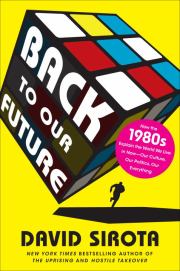 I’m about 7 weeks away from the launch of my third book, which is entitled
