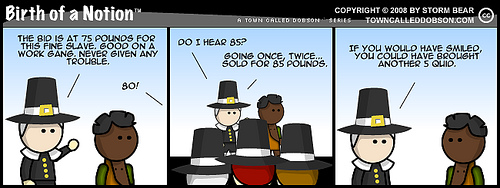
While we have already posted several telling interviews from our filming at Glenn Beck's 828 Restoring Honor Rally, but we haven't yet posted our most emotional, interactive, and intense experiences. Towards the end of our day downtown, we stopped to chat with some folks from the crowd- as we did throughout the day. When we began our interview with Madonna from Indiana, we were in the exact center of a circular cement area that is the entrance way to the World War II Memorial. Our conversation started with Madonna, the only person in her group of 5 or so who decided to stop and chat with us. Quickly, however, not only did several of her friends decide to join our discussion, but several onlookers decided that they belonged in our conversation as well. Before we knew it, we were encircled by 30 or so rally goers who decided to engage us (verbally) in an effort to try and convert us to Glen Beck's White Christian Civil Rights Utopia. Below is the majority of the half hour experience in 6 parts and at the very bottom is all 30 minutes of our discussions unedited.
One of the greatest strengths the United States has constitutes its ability to admit mistakes - to apologize and acknowledge that America has not always been right, and that it has sometimes done things terribly wrong. This capacity has always served the country well; if America has often traveled down the wrong road, it has even more often corrected its path.
Yet although people do the country a great service in perceiving in faults, sometimes the criticism goes a bit too far.
Take my college, for instance, a great institution which I love - but which exemplifies this excessive self-criticism. I have taken classes in which professors have labeled America a nation founded upon "white supremacy." Another course, supposedly chronicling America's history, turned out to be a litany of how the United States had oppressed blacks, women, Native Americans, Hispanics, Asians, the poor, homosexuals, Third World countries, the environment, and everything in between.
I have conversed with friends convinced that the United States has hurt the world far more than it has helped it. I know students so blinded by bitterness and hatred for America's wrongdoings that it is frightening and very sad - who find racism and oppression in every TV show or every action of the Republican Party. Sometimes I feel the blindness creeping on myself.
So in the spirit of fighting this blindness, here are five things America has done right:
Michael Moore was on Democracy Now! today for the full hour. You can watch/listen or read the whole transcript here. But I just want to excerpt the very end of what he had to say, in part because it continues the spirit I wanted to evoke this Independence Day.
In particular, what he suggests--which I think is really true--is that if we just had the courage, as Americans, to act on what we really already are and believe, rather than acting out of fear, as conservatives always want us to, then we really would be every bit as great as we like to pretend we are, even while not-so-secretly knowing that we're not.
AMY GOODMAN: As we wrap up, Michael, the war-the wars in Iraq and Afghanistan. What is your solution that you think should happen now?
MICHAEL MOORE: Well, it was-I think it was-was it last week or a couple weeks ago? We just-the Afghanistan war surpassed Vietnam as our longest war. I think we should start referring to it as what it is: it's Obama's war. Just as Johnson's war became Nixon's war, this is his war. I don't know why he'd want a war. This is a completely unwinnable-I don't even want to use that word, because what are we trying to win? I mean, it's so absolutely crazy....
I just--I think that there's so much good that we could do. You know, if you travel the world, you know that people like us as people, as individuals. There's something charming about our naïveté and our, you know, right? I mean, you know, "Hey! Hey! How ya doin'! Hey, yeah! I'm from Detroit! Yeah!" They could spot us coming. But I think we're capable of a lot of good. And when you have a billion people on this planet that tonight cannot drink a cup of clean water, two billion who don't have clean sanitation, what if we used our money to do that? I read this crazy statistic-and I have not fact-checked this, I'll just throw this out there-but it was something like, for $15 billion or something like that, we could dig so many-x number of wells in the third world that would greatly reduce that number of how many people don't have clean water. And I'm thinking, $15 billion is what we've been spending almost most every month on Iraq and Afghanistan. So, one month of the killing machine could give clean water to virtually all the people that don't have it? Wouldn't you rather be known as, you know, a citizen of a country that a child 10,000 miles away, while growing up, drinking clean water, saw that plaque on that well that said, "Brought to you from your friends in the United States of America"? That's how I'd like to be known.
It's not that I didn't know it, or even that I had forgotten, but rather obviously this is something that we as country seem not to realize, from Brad DeLong, in a piece about Obama's infamous deficit commission:
Four centuries ago, the consensus, in Western Europe at least, was that good and even adequate government in this fallen world was inevitably a rarity. Democracy always degenerated into mob rule, monarchy into tyranny, and aristocracy into oligarchy. Even when well run, democracy took little interest in the distant future, aristocracy took little interest in the well-being of those whom Simpson calls the "little people," and monarchy took little interest in anything other than legitimate succession.
Then, at the end of the eighteenth century, the founders of the United States of America and their intellectual successors claimed that this pessimism about government was unwarranted. "The science of politics...like most other sciences," claimed Alexander Hamilton, "has received great improvement....The regular distribution of power into distinct departments...legislative balances and checks...judges holding their offices during good behavior; the representation of the people in the legislature by deputies of their own election...are means, and powerful means, by which the excellences of republican government may be retained and its imperfections lessened or avoided..."
Perhaps Hamilton was too much the optimist. When I look at Barack Obama's deficit commission - indeed, look at governance worldwide - I see many imperfections, but few or no examples of excellence.
One of the great accomplishments of America is that it showed the possibility of good government at more than local scale, which in turn helped to show that some misfortunes taken to be beyond human reach are in fact avoidable. This, in turn, was directly a product of the development of modern liberalism, which provided both a philosophical foundation and an institutional architecture for the blending of classical and Renaissance republicanism with a new conceptual framework of individual rights, checks and balances and democratic self-governance. Once the possibility of good governance was proven possible, the doors were open to explore different ways of achieving it.
As DeLong properly notes, we're faced with rather grim prospects just now, but given the history of the past 200+ years, the grim prospects now facing us no longer appear as inevitable necessities of nature. If we are headed toward a massive return of evil governance--a distinct possibility, let's not kid ourselves--this is still just an historical/political development pressed forward by specific political/economic forces, and not a metaphysical necessity. The difference between the two is the difference between possibility and impossibility, between rational hope and irrational despair.
The New York Times recently posted a disturbing video on Pakistan. The report addresses the topic of anti-Americanism in the country, specifically with regards to its westernized, well-educated musicians:
While Pakistani journalists, playwrights and even moderate Islamic clerics have boldly condemned the Taliban, the nation's pop music stars have yet to sing out against the group, which continues to claim responsibility for daily bombings.
This summary doesn't do justice to the report. One really needs to watch the video - to hear the musicians themselves speak - to get a sense of their anti-Americanism.
One thing I've recently observed is the degree to which America self-corrects when selecting its leaders. It's very interesting to compare successive presidents; the new president nearly always lacks the weakness the previous president had. Though of course he comes with his own flaws.
I'll start with Jimmy Carter. Carter was known for being honest and a bit naive, in stark contrast to his predecessor Richard Nixon.
Carter, however, had a negative reputation for being an obsessive micromanager. He was replaced by Ronald Reagan - who was famous for leaving the details (and sometimes the whole plan itself) to his aides.
Reagan and the elder Bush were criticized as too old for the job. So along came Bill Clinton and Al Gore, the youngest presidential team in history, as the next presidential group.
Of course, Bill Clinton is remembered for his sexual indiscretion and the Monica Lewinsky affair. His replacement - George W. Bush - was widely characterized as morally upright and religious.
He was also characterized as stupid. Which is a criticism nobody would level at his successor Barack Obama - one of the most intellectual persons who has ever graced the high office.
The adage is "Time moves on." The assumption is all will get better. However, for the little people in the United States, those who work, pay taxes, and still cannot make ends meet, life has been a backward motion. Throughout the history of America, it was believed the people, with the assistance of elected Representatives, and well-chosen regulators would ensure that the United States was solid, strong, and fiscally viable. Currently the public is told. Federal Reserve Chairman Ben Bernanke has saved the country from certain crash. However, for the first time in generations, the population feels as though it is in free fall.
I'll be your mirror
Reflect what you are, in case you dont know
Ill be the wind, the rain and the sunset
The light on your door to show that youre home
When you think the night has seen your mind
That inside youre twisted and unkind
Let me stand to show that you are blind
Please put down your hands
cause I see you
The term Velvet Revolution was coined by a journalist after the first events and it caught on in world media and eventually in Czechoslovakia. The media, riding on an infotainment wave, saw this success and started the tradition of inventing and assigning a poetic name to similar events - see color revolution.
It is believed that the term originated from the various communist opposition groups which met in theaters such as the Laterna Magika, velvet referring to the velvet ropes found in all these theaters.[citation needed]
Another theory is that the revolution took its name from The Velvet Underground, an influential American rock and roll band. Václav Havel is a great fan of the Velvet Underground, and is a friend of Lou Reed, who was the principal singer-songwriter of the group, and told Reed after the collapse of communism, "Because of you, I am President."[13] The significance of music as an influence in the revolution is reflected in Frank Zappa (of whom Havel was also a lifelong fan), being asked by Havel to serve as a consultant for the government on trade, cultural matters and tourism.
It wasn't Ronald Reagan who won the Cold War. It was Lou Reed and Frank Zappa. And Nico.
100 days ago, President Barack Obama took the oath of office with an overwhelming mandate from America’s youth. Two out of every three citizens under the age of 30 voted for Obama in the 2008 election. We demanded change and Obama promised it. We demanded green jobs, strong climate policy, a safer and more prosperous future, and we came 12,000 strong to DC to make sure he and his administration heard us.
The demand to get involved building a greener, more sustainable future is there, but the supply of opportunities has not been. Over the last eight years, we’ve missed countless chances to invest in a clean energy economy, in science and engineering, and in green jobs for America’s youth. But things have begun to change. There are at least three major signs of progress to report on this front in just the first 100 days of President Obama’s administration:
The American Reinvestment and Recovery Act, which will create millions of new jobs and fund programs like the recently launched Youth Conservation Corps that will put 15,000 young people to work “resurrecting the treasures of America”
The creation of a Clean Energy Service Corps as part of the Serve America Act that will engage tens of thousands of youth in moving America towards energy independence
A new national energy education initiative announced yesterday that will inspire and train young Americans “to tackle the single most important challenge of their generation — the need to develop cheap, abundant, clean energy and accelerate the transition to a low carbon economy.” Among it’s many aims, this initiative will:
Invest $777 million in 46 Energy Frontier Research Centers to address the fundamental scientific roadblocks to clean energy and energy security
Establish a $5 billion “Race To The Top” fund to encourage states to improve the quality and supply of math and science teachers
Launch RE-ENERGYSE (REgaining our ENERGY Science and Engineering Edge) to empower young men and women to invent and commercialize advanced energy technologies
These are huge accomplishments. The supply is beginning to meet demand, but we still have a long way to go. There remains tremendous untapped desire among young people for green jobs and green opportunities - see a recent LA Times article on the surging demand for clean energy careers or Bob Herbert’s powerful op-ed last June about the 4 million “disconnected youth,” 16 to 24, “who are not in school and basically have no hope of finding work”.
President Obama knows that “energy is this generation’s great project” and as long as there is demand for more jobs researching geothermal technology, installing solar panels, weatherizing homes, and conserving our natural resources, we need to increase the supply of opportunities.
There is no “silver bullet.” As Bill McKibben likes to say, we need “silver buckshot”. We need to marshall all the human potential in this great country to address these challenges. I applaud President Obama on an extremely successful 100 days, but I ask for more. The young people of America are ready and willing to serve. Let’s give them the opportunity.
This entry is cross-posted at It's Getting Hot In Here.
A bell rings. The sound reverberates. A sentiment shared aloud resonates within the heart, mind, body, and soul of persons who heard the message. No matter the actions taken afterward, sullen statements are not easily erased from memory.
Days before Congress was asked to pass the stimulus package, the President uttered the now famous phrase; "I won," Republicans, as could have been expected, expressed resentment. Immediately, subsequent to President Obama's statement Democrats were said to have followed the Chief Executive's lead. Senate Majority Leader Harry Reid was asked if he thought Republicans might block the initiative. Empathically, he replied; "No." Today we know differently. In the House, the measure received no support from the Grand Old Party.
As we await approval from the Senate we may wish to consider, the past. Words that evoke division have a lasting effect.
Please peruse a missive penned shortly after President Obama reacted to pressure from the "Right."
As Americans go about their day, they chortle, croon, and chatter. Conversations are constant. Hymns are hummed. People sing even when there is no tune. There is much said, and little heard. Cries may strike a chord; yet, these too may be perceived as silence. People talk. They wail; and no one listens to the lovely lyrics are sung.
Fifty years ago today I was halfway through my sophomore year at WE Stebbins High, an almost completely segregated school in the almost completely segregated city of Dayton, Ohio, a town said at the time to be a southern city that happened to be north of the Mason Dixon line.
The school was "almost completely" segregated because it was located within a good Hail Mary pass of Wright Patterson AFB. I don't remember exactly the reasons but we were told that because the school received federal funds for students who were military dependents that it had to be integrated.
"Integration" was accomplished by the admission of two young Black kids, The boy was named Sam. I remember because we became friends for awhile until the transparent racist displeasure of my little Quaker Grandmother became thick enough to keep him from dropping by. She wasn't ready for a black president.
The girl's name is beyond my atrophied powers of recall. I can see their faces though; both were exceptionally attractive, beautiful in fact, bright, "A" students (National Honor Society), and the son and daughter of Air Force Officers. They weren't related, although they might have passed for brother and sister (to my eyes) and they knew each other from the Air Base (the Air Force at the time wasn't a lot more integrated than my high school).
Their presence among the lower and middle class adolescent white children of factory workers, shopkeepers and lower level bean counting managerial types caused no great stir. There were no serious problems (to my eyes) other than an occasional racist taunt, or snub. Civility towards them was rigorously enforced. The powers that be paddled freely and often back then and the sting of that paddle and its humiliation was seldom sought.
Jason Rosenbaum has an interesting take on the Obama accountability question we've been discussing here the last couple of days. He argues that we should do all we can to elect Obama, but then be ready to take him on aggressively as soon as he is elected. I think Jason's position is well argued, but I thought I would throw out a somewhat different perspective, based in part on my experience in the Clinton campaign, transition, and White House. It's not that I disagree with Jason, but just wanted to add more to the discussion.
I want two things out of an Obama Presidency:
-That it produces big progressive changes
-That it is a success
I think those two things are pretty closely linked, because our country's problems right now are huge enough that we need big, bold progressive things to happen to really change them. I also think that voters are in a bad enough mood that if Obama and the Democrats in Congress don't deliver big and important things that actually help in people's daily lives, they will get kicked out of office at the first available opportunity.
Now you may be asking: who do I care so much about whether Obama is successful or not? Lots of reasons, many of which might be obvious. Democrats are far more likely to keep Congress if he is; if he has 8 years rather than 4, he's a lot more likely to get some good things done; I would deeply hate for the first black President to be bad at the job, it would make electing another one that much tougher.
So given that I want Obama to succeed, does that give me pause about Jason's plan to be tough on Obama starting the day after he's elected? Well, not really, but I do think the progressive movement needs to have a sophisticated, multi-level strategy. I think progressives should, and very likely will, break into 3 types of players during an Obama administration.
1. Going on the inside. I hope that the Obama team can be convinced to place as many genuine progressives in government jobs as possible.
2. Friendly outsiders who are pushing them toward progressivism. These are the progressive organization people, bloggers, donors, and other activists who stay on the outside, and are generally friendly to, and supportive of the Obama team, who still gently push them to pick the progressive path as much as possible.
3. Outsiders who bang away. Those organization people, bloggers, donors, and other activists who decide their best role is to aggressively bang away, who work day in and day out to hold Obama accountable.
I believe we are best served when we have lots of people in all 3 of these categories. A movement does not succeed without having all 3 kinds of people in place, each playing their part. The progressive things that did happen during the Clinton years came as a direct result of each of these 3 kinds of people playing a big role.
The key is that the folks in all these categories need to forge a constructive working relationship with each other. There will definitely be tensions between the three at times, but if they can respect each other in their different roles, good things will happen.
The lesson of history is that big progressive change has come when a President open to change and a movement driving it worked together. That happened in the 1860s, the early 1900s, the 1930s, and the 1960s. But in each of those cases, the eventually progressive President ran a cautious, centrist campaign, was very nervous about making the big changes needed, and had to be pushed into doing the right thing by a combination of progressive insiders and outsiders. I hope that a decade from now, we'll be able to say that the Obama administration, helped by an effective, aggressive progressive movement, was able to deliver major progressive change for the American people.
Jeremiah Wright is a bad, bad man. He said mean things about America, how God should punish America. Nobody says that.
Nobody except Thomas Jefferson, Frederick Douglass, Abraham Lincoln, Martin Luther King, Jr., Jerry Falwell, Pat Robertson, and John Hagee.
Yup, all sorts of people say God should (or already has) punish(ed) America. The only difference lies in just what they think we've been doing wrong....



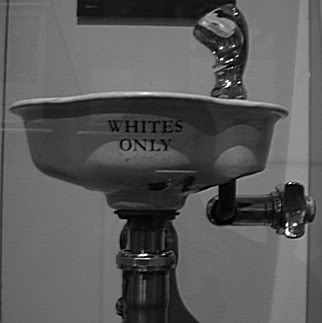 Fifty years ago today I was halfway through my sophomore year at WE Stebbins High, an almost completely segregated school in the almost completely segregated city of Dayton, Ohio, a town said at the time to be a southern city that happened to be north of the Mason Dixon line.